Introduction
WHOIS privacy protection addresses a fundamental tension inherent in domain registries: the public exposure of registrant contact data via the WHOIS protocol conflicts with the imperative to keep this personal information confidential. This inherent conflict creates a multifaceted technical challenge for engineers designing domain registration systems—they must balance transparency, security, and privacy compliance without compromising the critical DNS resolution process or the ability to validate domain ownership reliably.
At the heart of WHOIS privacy services lies proxy registration, a technique that replaces personal contact information with anonymized proxy details. This abstraction serves as a shield against spam, identity theft, and targeted attacks, but it also introduces complexity into domain transfer processes, legal inquiries, and abuse handling workflows. Implementing effective WHOIS privacy protection requires tight integration of secure data storage, granular access controls, and rigorous policy enforcement to preserve operational accuracy and uphold DNS security guarantees such as DNSSEC.
This article delves into the internal mechanics of domain name privacy protection, explores its pragmatic effects on real-world systems, and clarifies the conditions under which enabling WHOIS privacy is appropriate. We will examine how these proxy mechanisms interface with registrars and registries to maintain domain ownership confidentiality without disrupting the DNS ecosystem’s functional integrity.
Understanding WHOIS Privacy Protection and Its Core Challenges
The Purpose and Necessity of WHOIS Privacy
The WHOIS protocol has long served as a cornerstone of internet infrastructure, providing public access to domain registration details—such as registrant names, postal and email addresses, and phone numbers. This transparency supports vital functions: it enables verification of legitimate domain ownership, facilitates resolution of intellectual property disputes, and assists in abuse investigations including phishing and cybercrime takedowns. Consequently, publicly reliable WHOIS data fosters operational trust and accountability across the Domain Name System (DNS) landscape.
However, this same openness also exposes registrants to significant privacy risks. Publicly available registrant information frequently becomes a target for automated spam harvesting, unsolicited marketing campaigns, and increasingly sophisticated social engineering or identity theft attempts. The primary engineering challenge lies in preserving a delicate equilibrium between transparency—essential for security and operational integrity—and confidentiality, vital for protecting individuals’ privacy rights and safeguarding sensitive data.
Technically, the original WHOIS protocol was designed to provide static, unencrypted records without mechanisms for granular access control or privacy protections. It predates modern data protection expectations and regulations. As a result, WHOIS privacy protection today relies predominantly on external mechanisms—primarily implemented by registrars through specialized services billed as domain privacy or domain registration privacy. These services function as a proxy layer by substituting the registrant’s personal contact records with anonymized or generic proxy information maintained by the registrar or a trusted third party. For a comprehensive overview, see What is WHOIS Privacy Service?.
This proxy abstraction allows registrants to conceal their real contact details while still enabling legitimate third-party requests (such as abuse reports or domain ownership validations) to be transparently forwarded. Importantly, this privacy layer operates orthogonally to DNS’s core function: domain name resolution remains unaffected since it depends solely on authoritative domain-to-IP mappings rather than on WHOIS metadata.
Nevertheless, proxy-based WHOIS privacy introduces trade-offs. Masking registrant contacts inevitably decreases the immediacy and granularity with which ownership details can be accessed, complicating dispute resolution, abuse investigations, and law enforcement inquiries. Furthermore, the tension between domain privacy and transparency intersects with jurisdictional factors: varying data protection regimes shape disclosure obligations and complicate system design and operational workflows.
Understanding these foundational tensions and dynamics prepares the way for a technical and legal exploration of how WHOIS privacy mechanisms reconcile competing demands while maintaining robust domain ownership management.
Technical and Regulatory Challenges in Managing Domain Ownership Data
Implementing WHOIS privacy protection requires navigating three often competing priorities simultaneously: guaranteeing reliable DNS functionality, ensuring accurate ownership validation, and safeguarding registrant privacy compliant with evolving legal mandates.
First and foremost, reliable DNS resolution is non-negotiable. The entire internet ecosystem depends on domain names resolving stably and predictably to their authoritative servers. While DNS lookups do not query WHOIS data directly, registrant information is critical during administrative operations like domain transfers, updates, or dispute resolution. Privacy mechanisms must therefore retain the integrity and traceability of ownership data behind the scenes without exposing it publicly.
Second, ownership validation requires registries and registrars to maintain accurate, verifiable registrant data to prevent fraud such as domain hijacking or impersonation. Proxy-based WHOIS privacy services effectively “stand in” for the real owner via shielded contact details but must also enable forwarding of legitimate inquiries. This necessitates sophisticated forwarding infrastructures—often implemented as secure email gateways or message relays—that obscure real identities while reliably delivering correspondence. Ensuring these channels resist spoofing and abuse is a critical engineering challenge.
Third, registrant privacy obligations—especially under frameworks like the EU’s General Data Protection Regulation (GDPR)—impose stringent rules around collection, storage, and disclosure of personally identifiable information (PII). GDPR has fundamentally reshaped the WHOIS landscape by prompting registries and registrars worldwide to adopt privacy protections as a de facto standard, masking WHOIS fields in routine queries. See GDPR and WHOIS privacy compliance for further reading.
Technically, implementing privacy proxy architectures under such regulations is complex. Proxy services must synchronize masked WHOIS records with backend registries in near real-time while supporting flexible opt-in/out controls tailored to jurisdictional requirements. For example, in cases where public disclosure is legally mandated—such as bona fide abuse investigations or court orders—the proxy service must securely escalate and reveal registrant details only to authorized parties, maintaining audit trails and strict access controls for compliance.
From a security engineering viewpoint, forwarding channels must also be hardened to mitigate abuse risks. Attackers might exploit proxy forwarding to facilitate email spoofing, amplify denial-of-service attacks, or obscure attribution. Registrars therefore implement strict relaying policies, message filtering, rate limiting, and comprehensive logging to enforce traceability without undermining privacy.
Operational realities illustrate these demands vividly. Many registrars have embraced a “privacy by default” model, automatically enabling WHOIS privacy protections at domain registration unless explicitly disabled. This streamlines compliance and improves customer experience but places heavy demands on backend systems to maintain consistent synchronization between registrant identities, proxy records, and registry databases. APIs and interfaces must be carefully designed to accommodate regional policy variations and dispute resolution workflows.
For instance, one major registrar reported a 30% reduction in abuse complaint resolution times after deploying an enhanced privacy proxy infrastructure integrated with automated verification workflows and selective disclosure controls. This improvement stemmed from the platform’s ability to rapidly validate abuse reports and securely route sensitive information to responders while maintaining anonymized public WHOIS views.
As data privacy laws continue to evolve globally, engineering approaches must keep pace. Future-proof system designs emphasize modular privacy layers, layered encryption of data at rest and in transit, and fine-grained, policy-driven access controls—all orchestrated by automation that dynamically adapts to jurisdictional requirements. This blend of technical rigor and operational agility ensures WHOIS privacy protection preserves both domain governance integrity and individual data rights.
With these regulatory and technical foundations established, we now deepen our understanding of the detailed architectures and engineering trade-offs that enable effective WHOIS privacy protection in modern domain registration ecosystems.
How WHOIS Privacy Protection Mechanisms Work
Proxy Registration and Anonymization Techniques
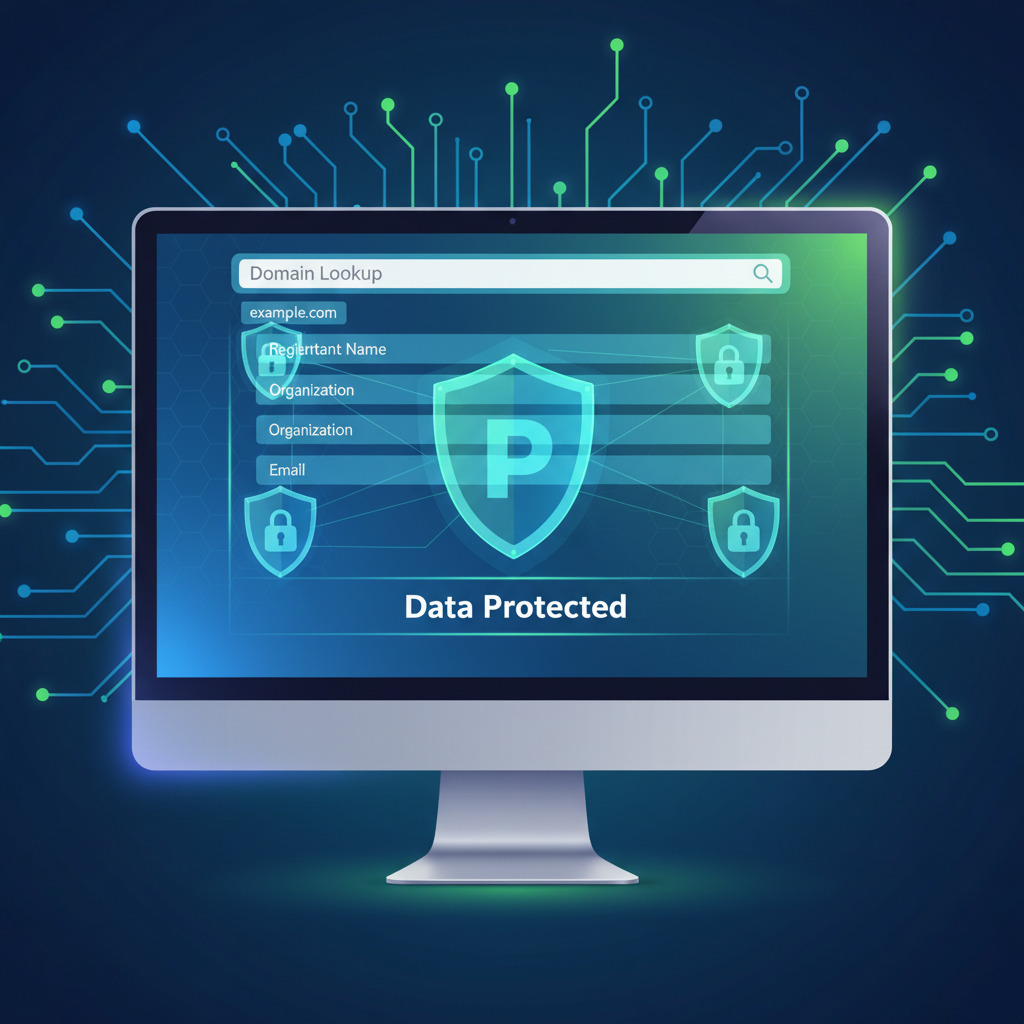
Proxy registration represents the technical foundation of WHOIS privacy protection, widely adopted by registrants aiming to obfuscate personal identification within public WHOIS databases. At its core, proxy registration replaces the real registrant’s personally identifiable information (PII) with anonymized contact data belonging to a privacy service provider. This replacement ensures WHOIS queries return proxy-managed contacts instead of revealing the true owner, effectively anonymizing registrant identity at the federation layer.
Technically, proxy registration overwrites key WHOIS fields—registrant name, organization, postal address, phone number, and email—with proxy details. The proxy acts as a gatekeeper: incoming communications directed at WHOIS contacts are funneled through the privacy provider’s infrastructure, forwarding messages without exposing the actual registrant’s PII. For legitimate correspondence such as abuse reports or administrative queries, these systems deploy secure email forwarding using ephemeral proxy email addresses mapped to the registrant, with filtering controls to block spam or malicious traffic.
Phone number masking leverages virtual telephony platforms that route calls or SMS messages transparently to the underlying registrant without direct exposure. Likewise, physical address substitution uses addresses leased or owned by the privacy provider, satisfying ICANN’s WHOIS accuracy obligations without pinpointing the registrant’s true location. This approach maintains a valid point of contact for accountable communication, while preventing mass harvesting of personal data.
Behind the scenes, privacy services maintain secure, auditable mappings between proxied domains and their authentic registrants. This linkage supports registrar-level verification and responses to authorized requests such as court orders or law enforcement demands. Access controls and audit logs strictly govern view and disclosure permissions, preserving authoritative record integrity despite public masking.
It is important to consider failure modes and their operational impacts. Proxy service outages can disrupt forwarding channels, resulting in missed legitimate communications that may jeopardize domain renewals, ownership validations, or abuse response effectiveness. Misconfigurations or stale proxy mappings risk lost messages, delayed abuse notifications, or inadvertent loss of domain control. Operationally, these risks compel registrars and privacy providers to establish redundant infrastructures, strong change management, and service-level agreements that guarantee uptime and data accuracy.
A common misconception is that proxy registration encrypts WHOIS data—this is not the case. Public WHOIS output remains plaintext and fully queryable; proxy registration substitutes the content of fields without encrypting the data. Therefore, proxy registration is an identity displacement technique focused on privacy, not an encryption or confidentiality scheme protecting data in transit or storage.
Proxy registration primarily mitigates automated harvesting of registrant data used for spam campaigns, reduces exposure to phishing and social engineering attacks targeting admin emails, and curtails identity theft by severing direct WHOIS-based access to personal contact fields. It also limits solicitations from marketing or domain brokerage entities that scrape WHOIS for outbound campaigns.
- Registry-level privacy flags operate at the TLD registry layer, automatically redacting or anonymizing WHOIS fields prior to publication. This reduces dependence on third-party proxies and simplifies privacy enforcement but restricts registrar and registrant control and may complicate transparency and dispute resolution downstream.
- GDPR-mandated data redaction enforces wholesale suppression of personal data for EU-resident registrants via access-controlled WHOIS or “thin WHOIS” models. While strong for legal compliance, this reduces WHOIS data utility for administrative and security uses, offers less flexibility to users, and complicates ownership attribution in disputes. See the ICANN GDPR Compliance Framework for details.
From a compliance perspective, proxy registration enables “domains with privacy” that conform to ICANN’s WHOIS accuracy rules by presenting valid proxy contacts while masking true registrants. However, providers must rigorously maintain accuracy and timely data updates to avoid risks of domain suspension from non-compliance.
Proxy registration introduces nuanced challenges during domain transfers. Since public WHOIS proxy contacts remain static during transfers, registrars internally update ownership mappings and authenticate transfers in accordance with ICANN policy without public disclosure of real registrant details. This layering preserves privacy without sacrificing authoritative ownership verifiability or undermining stewardship workflows during domain transitions.
Overall, proxy registration remains the dominant practical method to implement domain privacy, balancing confidentiality, compliance, and operational transparency. It provides domain owners “privacy with accountability,” enabling anonymity publicly while preserving the backend traceability essential to domain governance and security enforcement.
System Integration and DNS Security Considerations
Having explored the proxy mechanisms underpinning WHOIS privacy, the discussion naturally extends to the system integration challenges and security considerations that shape their practical deployment. Implementing privacy protection requires deep integration within registrar and registry infrastructure, balancing data confidentiality with operational transparency and preserving DNS ecosystem security guarantees.
WHOIS privacy hinges on a dual data architecture within registrar systems: the authoritative registrant data is stored securely in hardened databases under strict role-based access controls, while public WHOIS responses dynamically substitute the registrant fields with proxy contact data. Data-at-rest encryption, network security zoning, and comprehensive audit logging form foundational defenses to prevent insider threats or unauthorized leaks.
During WHOIS query processing, proxy data injection occurs in real time at the registrar’s WHOIS server or through linked privacy service layers via APIs. Systems ensure harmonization with ICANN’s WHOIS data model and TLD-specific policies, maintaining syntactic and semantic correctness. Registrars reconcile dual views of domain ownership—public anonymized and backend authoritative—in a transactional fashion to ensure consistency and avoid data races or stale exposures.
Crucially, WHOIS privacy integration does not interfere with DNS operational mechanisms, including DNSSEC validation. The authoritative DNS zone file, managed by registry namespace servers, remains untouched. DNS resolution relies solely on the domain-to-IP mapping—the proxy WHOIS data is purely metadata unrelated to resolution chains. DNSSEC cryptographically verifies zone integrity and origin authentication independently of WHOIS data exposure. This coexistence ensures that domain privacy does not degrade DNS integrity or security. The IETF DNSSEC RFC family documents these cryptographic assurances.
Similarly, domain transfer workflows integrate securely with privacy protection by grounding authentication on registrar-held identity records rather than public WHOIS contents. Authorization codes (AuthInfo keys) and other verification methods are managed behind registrar walls, preserving privacy while ensuring transfer security remains uncompromised by masked public records.
Access control complexity further increases under multi-jurisdictional compliance frameworks like ICANN’s RAA and GDPR. Registrars and registries implement layered access tiers:
- Public WHOIS interfaces return proxy-masked data by default
- Authorized party portals allow registrars and privacy providers to access unmasked registrant details under contractual obligations
- Restricted legal access workflows enable disclosure to authorized requestors via subpoenas or lawful orders, with forensic audit logging to maintain accountability and prevent unauthorized exposure
This multi-tier model balances privacy protection by default against operational and legal exigencies requiring data disclosure.
In practice, registrars must anticipate scenarios where privacy yields to operational needs. Abuse reports often require revealing the true registrant to law enforcement or security researchers under confidentiality agreements. Dispute resolution mechanisms like UDRP also invoke controlled registrant exposure. These cases require carefully managed workflows and well-trained personnel to maintain data sanctity while meeting external obligations.
Not all TLDs permit unrestricted WHOIS privacy. Many ccTLDs—such as .us, .ca, or .de—enforce strict data publication or residency verification rules that limit or prohibit proxy registrations. In such cases, privacy protection may rely on data minimization or partial redaction, complicating consistent privacy enforcement across domain portfolios.
Certain high-value or governmental domains mandate transparent WHOIS data for stringent validation requirements, precluding proxy anonymization. Domain owners and system architects must carefully evaluate TLD and jurisdictional policies when deciding on privacy enablement.
- Preserve core data security and privacy guarantees without compromising the utility of WHOIS records for stewardship and ecosystem security
- Ensure seamless, privacy-respecting workflows for legitimate communications, transfers, and administrative actions
- Comply with complex, often conflicting multi-jurisdictional legal frameworks that govern disclosure and confidentiality requirements
Balancing these goals demands robust system design, continuous compliance auditing, and operational agility, core capabilities expected from senior engineers developing domain privacy infrastructures at scale.
Together, this architectural and operational overview rounds out our understanding of the intricate engineering and policy interplay involved in delivering WHOIS privacy protection without compromising DNS ecosystem soundness or compliance.
Trade-offs and Limitations of Implementing WHOIS Privacy Protection
Impact on Domain Transfer and Legal Processes
Transitioning to a discussion of trade-offs naturally follows from exploring the architectural fundamentals of WHOIS privacy. Proxy-based privacy mechanisms impact the workflows around domain ownership validation, particularly during transfers and legal proceedings.
For domain transfers, proxy substitution complicates ownership authentication. Registrars and prospective new providers often rely on WHOIS contacts (such as registrant or administrative emails) to corroborate domain ownership. When these contacts are anonymized through privacy proxies, direct validation mechanisms become infeasible. Instead, transfer approvals typically depend on alternative channels like EPP authorization codes, validation emails routed via proxy services, or out-of-band identity verification protocols.
Each alternative introduces operational overhead: verifying ownership via indirect channels increases latency and the chance of transfer failures. Misconfigured proxy contacts or delays in proxy response create bottlenecks, resulting in longer hold times, registrar disputes, or customer dissatisfaction. In highly scaled environments, these delays complicate bulk management of domain portfolios and add to support load.
From a legal and administrative standpoint, privacy proxies reduce transparency critical to investigations by law enforcement, intellectual property enforcement entities, or courts. Concealing true registrant details behind proxy records necessitates structured, secure disclosure workflows in registrar infrastructure. Legal requests must be carefully escalated through privacy service operators, who act as intermediaries.
Such layered disclosure paths introduce procedural delays and increase operational complexity. This complexity is compounded in cross-border requests where jurisdictional conflicts, divergent privacy laws, or bureaucratic hurdles may slow or prevent timely access to registrant data.
Operationally, registrars bear additional compliance burdens: they must maintain auditable logs of privacy proxy mappings, enforce access controls rigorously, and coordinate with privacy providers to fulfill legal demands promptly. System designs must embed these workflows to allow selective de-anonymization only upon authorized legal authorization, preserving strict policy adherence and minimizing unauthorised leaks.
These challenges extend to transfer policy design. Domain privacy frameworks must explicitly accommodate privacy-specific contingencies like revocation of privacy upon abuse detection, proxy contact updates, or emergency disclosures. Without this, registrars risk failed transfers and legal non-compliance.
- Introduces friction and latency in domain transfer due to indirect ownership validations
- Necessitates secure, often manual or semi-automated disclosure processes for legal and administrative requests, adding operational overhead
- Creates dependency on proxy service operators as intermediaries, which can delay or limit information disclosure
Senior system architects must design domain privacy infrastructures that mitigate these frictions without compromising privacy guarantees or transfer security, balancing operational efficiency with compliance risks.
Potential Risks and Operational Challenges
Beyond transfer and legal complications, WHOIS privacy mechanisms introduce operational risks and engineering challenges affecting abuse mitigation, system reliability, and governance.
A key operational challenge is reduced efficacy of abuse reporting. Concealing registrant contacts behind proxy services hampers abuse pipelines: entities seeking to report phishing, malware hosting, or spam rely on registrant contact details. Proxy addresses may lack incident response rigor, introduce forwarding delays, or be ignored entirely if not actively monitored. Consequently, malicious actors exploit privacy shields to reduce accountability, increasing risk exposure.
Large registrars managing thousands of privacy-protected domains must invest in middleware platforms integrating abuse reporting APIs with privacy providers. These systems correlate incoming reports to real registrants and automate escalations. The operational complexity and cost of this integration is non-trivial and must be accounted for in system architecture.
Closely related is the risk of proxy registrant misuse and anonymity abuse. Malicious actors leverage anonymous domains to obscure identities in fraud, intellectual property infringement, or cybercrime operations. To mitigate, privacy providers must institute strong vetting processes—ideally incorporating government-issued ID verification, multi-factor authentication, and ongoing compliance audits.
Continuous monitoring using behavioral analytics or anomaly detection on proxy accounts helps identify misuse patterns proactively. Without such precautions, privacy services face reputational risk and potential regulatory sanctions for facilitating anonymity abuse.
On the infrastructure side, ensuring system reliability and robust policy enforcement is technically complex. Proxy data injection must be consistent and timely across distributed WHOIS servers and registrar databases. Architectural problems such as eventual consistency or partial updates can cause WHOIS discrepancies, accidental exposés of true registrant data, or stale proxy contacts.
Registrar policies must codify triggers for privacy revocation (e.g., abuse escalations or court orders). Implementing automated policy engines with logging and fail-safe overrides reduces reliance on manual processes but adds architecture complexity and demands sophisticated testing.
At the policy level, balancing privacy with necessary transparency remains a constant tension. Too permissive privacy can erode trust by masking accountability; too restrictive privacy discourages registrant adoption and fails to protect vulnerable registrants.
Engineering design choices—including proxy data conventions, escalation automation, access exception whitelisting, and incident response workflows—directly affect operational robustness and ecosystem trustworthiness.
Common pitfalls manifest as unreliable proxy contacts causing delayed abuse handling, disconnects between abuse reporting tools and privacy provider systems, and inconsistent privacy revocation policies that frustrate enforcement stakeholders.
- Diminished traceability and responsiveness in abuse workflows due to masked registrant data
- Elevated risk of anonymity misuse demanding strict identity verification and monitoring
- Complexity in maintaining consistent, up-to-date WHOIS proxy data with automated policy enforcement
- A fundamental privacy-transparency balance influencing governance and security postures
Architecting these systems requires advanced technical expertise and operational discipline to optimize the privacy-security trade-off without sacrificing ecosystem accountability.
For foundational context on domain privacy data management, see EasyDNS knowledge base on WHOIS Privacy.
Managing WHOIS Privacy Protection with Domain Registrars
Enabling and Configuring WHOIS Privacy Services
Building on the detailed understanding of WHOIS privacy mechanisms and their trade-offs, practical deployment considerations now come into focus. Registrars implement WHOIS privacy primarily by substituting registrant PII with proxy data in public WHOIS directories. The proxy is usually operated by the registrar or a third-party privacy provider, creating an abstraction layer shielding registrant contact details while maintaining communication channels.
Operationally, enabling WHOIS privacy is typically performed through registrar domain management portals (e.g., Namecheap, GoDaddy) or programmatically via RESTful APIs designed for domain lifecycle management. Domain owners or engineers activate privacy by navigating the domain’s management interface or invoking API calls to toggle privacy features.
Service offerings vary widely: basic free protections replace registrant contact data with generic proxy info, while premium tiers add filtered email forwarding, enhanced spam controls, dedicated abuse handling, or legal support. Higher-tier plans often include SLAs with defined response times, critical for business domains requiring dependable privacy services.
Toggling WHOIS privacy generally involves a simple UI action or API request. However, domain engineers must account for asynchronous data propagation. WHOIS and RDAP data publication occurs via registry synchronization cycles and caching layers (including recursive WHOIS servers and third-party query caches), meaning changes may take several hours to several days to fully propagate. This delay can result in transient windows where sensitive information is exposed publicly or privacy removal appears inconsistent.
For detailed contrasts between WHOIS and the more modern RDAP protocol—which standardizes registration data access with structured outputs and supports access control but currently relies on similar proxy paradigms—see the IETF RDAP specification.
An industry trend accelerating is default-on WHOIS privacy activation. Registrars like Namecheap enable privacy by default on new registrations, greatly simplifying privacy deployment and compliance with regulations such as GDPR. This approach reduces user effort and exposure risk but raises governance complexities in obtaining explicit user consent and maintaining detailed audit records for compliance and incident response.
Common deployment failure modes include:
- Propagation delays that expose data temporarily during WHOIS cache refresh lags
- Third-party data leakage from outdated cached WHOIS copies beyond registrar control, such as monitoring or alert services
- TLD-specific policy constraints, with many ccTLDs prohibiting or restricting privacy service use, forcing mandatory public exposure of registrant data
Comparing free versus paid WHOIS privacy services reveals that paid plans typically provide richer feature sets: active abuse monitoring integrations, reliable message relaying with filtering, expert legal assistance, and stronger SLAs. Free services usually offer basic proxy contact substitution, adequate for low-risk or personal domains but lacking enterprise-grade protections.
In summary, managing WHOIS privacy configuration in registrars entails navigating operational tooling nuances, coordinating with backend registry synchronization, and respecting domain policy constraints. Engineering teams must build transparent workflows supporting both automated and manual controls, ensuring minimal privacy exposure risk and regulatory compliance.
Having established deployment mechanics, we now turn to the nuanced decision criteria surrounding when WHOIS privacy protection is strategically appropriate.
Criteria for When to Use WHOIS Privacy Protection
Determining whether to enable WHOIS privacy protection involves assessing the domain’s exposure risks, operational context, and compliance requirements. This decision should be grounded in a threat model and business or technical constraints rather than made by default.
For personal websites, portfolios, SaaS projects, or small-scale backend services, WHOIS privacy meaningfully reduces exposure of personal PII in WHOIS databases. This reduction limits risk vectors for spam bots, phishing scripts, and opportunistic social engineering that target exposed emails and phone numbers.
Startups and early-stage projects without dedicated security teams benefit from privacy by lowering unwanted outreach, abusive traffic, or identity theft risks that could distract or drain resources. Privacy serves as a low-cost protective layer.
Domains linked to sensitive technical environments—such as security research platforms, API backends processing confidential data, or developer communities involved in controversial software—face escalated threats. Exposing registrant identity can invite harassment, targeted attacks, or intellectual property predation, making privacy essential for operational risk containment.
Nevertheless, the choice to enable domain privacy is not without trade-offs. Masking WHOIS data inherently complicates legitimate investigative and compliance workflows. Law enforcement, intellectual property litigators, or regulatory auditors require verifiable access to true registrant information to enforce laws and adjudicate disputes. Privacy providers typically mediate these requests through legal disclosure channels, but this introduces latency and operational friction.
In sectors subject to strict data governance frameworks—such as GDPR, CCPA, HIPAA, or financial compliance regimes—accurate registrant identity disclosure remains essential for audit trails and governance. Organizations in these domains may mandate transparency in domain registration as part of contractual or regulatory obligations, limiting privacy applicability.
Additionally, some ccTLD registries forbid WHOIS privacy entirely or only allow partial redaction, necessitating domain teams to consider policy compliance on a per-TLD basis. Alternative privacy approaches—such as access-restricted registry queries or federated privacy models—may be required, complicating uniform privacy deployment.
The practical value of WHOIS privacy aligns closely with threat models:
- For generalized spam and unsolicited outreach, masking registrant data thwarts automated scraping and bulk harvesting.
- Against targeted harassment or identity reconnaissance, privacy obscures attribution and contactability.
- Where domain ownership credibility and transparency drive trust, such as for regulated entities or financial APIs, disabling privacy may be preferable.
Operationally, domain owners should audit WHOIS privacy status regularly to ensure configurations remain robust and up-to-date. Privacy configurations are not “set and forget” settings; evolving threat landscapes, registry policy changes, and organizational processes necessitate ongoing reevaluation.
In sum, informed enablement of WHOIS privacy requires senior engineers and architects to embed domain privacy within broader security, compliance, and operational policies, weighing protective benefits against transparency requirements and potential friction introduced in governance workflows.
Key Takeaways
- WHOIS privacy protection addresses the inherent technical challenge of safeguarding domain registrant data, preventing exposure of contact information through the legacy WHOIS protocol. This challenge directly impacts security, regulatory compliance, and operational integrity in distributed domain registration systems. Engineers must comprehend how proxy registration abstracts registrant data while preserving backend ownership validation and DNS functionality.
- WHOIS privacy uses proxy registration to decouple public registrant contact data from the true owner by substituting proxy service contacts. This substitution provides anonymity without altering core DNS resolution behavior but requires reliable forwarding and abuse mitigation infrastructure.
- Privacy services maintain authoritative registrant data internally to support ownership verification and compliance. This split data model balances anonymity with operational and legal accountability, demanding secure storage, controlled access, and audit trails.
- Public WHOIS data exposure enables spam harvesting, identity theft, and targeted attacks. WHOIS privacy reduces this surface but does not replace the need for complementary security controls addressing domain hijacking or DNS abuses.
- Implementing WHOIS privacy affects domain transfer workflows and dispute mechanisms due to obfuscated ownership data, necessitating registrar-mediated verification that introduces latency and complexity.
- WHOIS privacy is often optional and paid due to additional operational overhead and abuse management costs. Engineering these services requires dynamic enablement protocols, billing integration, and seamless syncing with registry databases while ensuring DNS availability.
- Enabling WHOIS privacy involves registrar support and can be managed via APIs or control panels, emphasizing automation and authorization controls to safeguard user privacy integrity.
- Legitimate legal or security requests for registrant data demand rigorous policy workflows to reconcile privacy compliance with disclosure obligations, creating engineering trade-offs balancing automated privacy enforcement and transparency.
- Proxy registrations preserve DNS security protocols such as DNSSEC without degradation, maintaining cryptographic integrity alongside privacy abstraction layers.
This article has examined how WHOIS privacy protection layers integrate with domain registry infrastructure, shaping operational workflows and enforcing delicate balances between privacy and transparency.
Conclusion
Balancing the competing imperatives of transparency and privacy in WHOIS domain registration systems embodies a complex technical and regulatory challenge critical to the DNS ecosystem’s integrity and trustworthiness. Proxy registration services provide an effective means to obscure sensitive registrant data, mitigating abuse and identity exposure risks, yet this obfuscation complicates ownership validation, abuse response, and legal compliance workflows.
The accelerated evolution of global data protection regimes demands that domain privacy architectures remain adaptive—capable of accommodating multi-jurisdictional mandates while ensuring uninterrupted operational continuity and robust security assurances. For domain owners, registrars, and system architects alike, deploying WHOIS privacy protection requires nuanced risk modeling and strategic prioritization to ensure privacy enhancements do not undermine accountability or stewardship.
Looking forward, the key design challenges will revolve around integrating fine-grained access controls, cryptographically enforced data compartmentalization, and policy-driven automation that dynamically responds to legal and operational triggers. These layered architectures must uphold not only individual privacy rights but also the domain name system’s foundational role as a trustworthy, resilient governance platform.
As the internet scales and decentralizes, the question for engineers is not whether privacy vs. transparency trade-offs will arise—but whether our domain registration system designs make these trade-offs visible, auditable, and manageable under the complexities of production pressure, evolving threat landscapes, and shifting regulatory regimes.