Introduction
Domains rarely fail silently—issues in ownership or configuration often ripple through DNS resolution, SSL validation, and security posture before anyone notices. Despite this, many engineers overlook the critical step of scrutinizing WHOIS records during domain acquisition, unknowingly exposing their operations to costly risks that could have been detected earlier. Understanding and analyzing WHOIS data is therefore essential to underpin resilient infrastructure and prevent domain-related failures.
WHOIS red flags—such as frequent ownership changes, recent registration dates, or concealed registrant data—signal unstable or potentially compromised domain assets that undermine system reliability, security, and intellectual property integrity. Detecting these indicators proactively informs trust boundaries, anticipates DNS anomalies, and helps avoid pitfalls like domain hijacking or fraudulent resale, which can disrupt service continuity and damage reputation.
This article delves into practical WHOIS red flags, their influence on architecture and security decisions, and how engineers can leverage automated tools without losing critical context—enabling smarter, risk-aware domain acquisition and management strategies.
Understanding WHOIS Records and Their Importance
To grasp how WHOIS data informs domain acquisition and security, we first need to understand its structure, functional role, and inherent limitations. WHOIS records represent the foundational metadata tied to domain registration, underpinning ownership validation, DNS stability, and certificate-based trust.
Core Components of WHOIS Data
WHOIS data is governed by ICANN policies and collected by registrars and registries, typically including multiple structured fields essential for verification and operational continuity.
- Registrant Information: This field includes the registrant’s name, organization, physical address, email, and phone contacts. It establishes domain credibility and accountability; consistent, verifiable registrant data affirms legitimate ownership. Conversely, anonymized or proxy-registered WHOIS entries—frequently employed by privacy protection services—conceal true ownership, complicating incident response, audits, and domain reputation assessments. Certificate Authorities (CAs) rely on accurate registrant verification to prevent fraudulent SSL certificate issuance, directly tying WHOIS accuracy to cryptographic trust.
- Registration and Expiration Dates: These timestamps define a domain’s lifecycle and directly influence operational risk. Recently registered domains lack a trust history, making them more vulnerable to spam, phishing, or rapid transfers common in cybercrime. Domains approaching expiration risk hijacking or unintended outages if renewal lapses occur. System owners dependent on stable domains must vigilantly monitor these dates to maintain DNS and service availability.
- Administrative, Technical, and Billing Contacts: Separate from the registrant, these role-specific contacts serve escalation, troubleshooting, and billing functions. Outdated or obscured contacts delay incident resolution or complicate ownership verification during domain transfers or disputes, directly impacting operational resilience.
Accurate WHOIS data is therefore critical across DNS infrastructure, SSL certificate issuance, and ownership accountability. DNS relies on authoritative registries to delegate name servers properly; any inconsistencies in WHOIS flow through to resolution failures manifesting as end-user outages. CAs cross-reference WHOIS data in domain control validation steps, reducing fraudulent certificate issuance risk. Transparent ownership also establishes trust boundaries that downstream security mechanisms depend on.
Despite its importance, WHOIS suffers from data integrity challenges. Update latencies introduce temporal inconsistencies—registrant information may change but propagate slowly. Privacy services inject ambiguity by masking registrant details, undermining forensic investigations and automated security tooling. Frequent domain transfers can result in stale or conflicting WHOIS snapshots, complicating compliance and attribution.
In this operational and security context, a “red flag warning” from WHOIS analysis is not merely a cautionary note but a technical alert raised by heuristics or rules to indicate lifecycle vulnerabilities. Such flags may highlight privacy proxy usage, registrant discrepancies, recent registrations, or inconsistent contacts, collectively signaling elevated risk that can degrade reliability, compliance, or enable abuse. Automated tooling or human operators rely on these warnings to trigger further checks or reject risky domains.
Understanding these intricacies provides a foundational framework to leverage WHOIS data as a tactical asset during domain acquisition.
Common Uses of WHOIS in Domain Acquisition
Having established the structure and importance of WHOIS data, we now explore how it is operationalized during domain acquisition workflows. Corporate and infrastructure-sensitive environments systematically integrate WHOIS analysis within due diligence to assess domain legitimacy and trustworthiness.
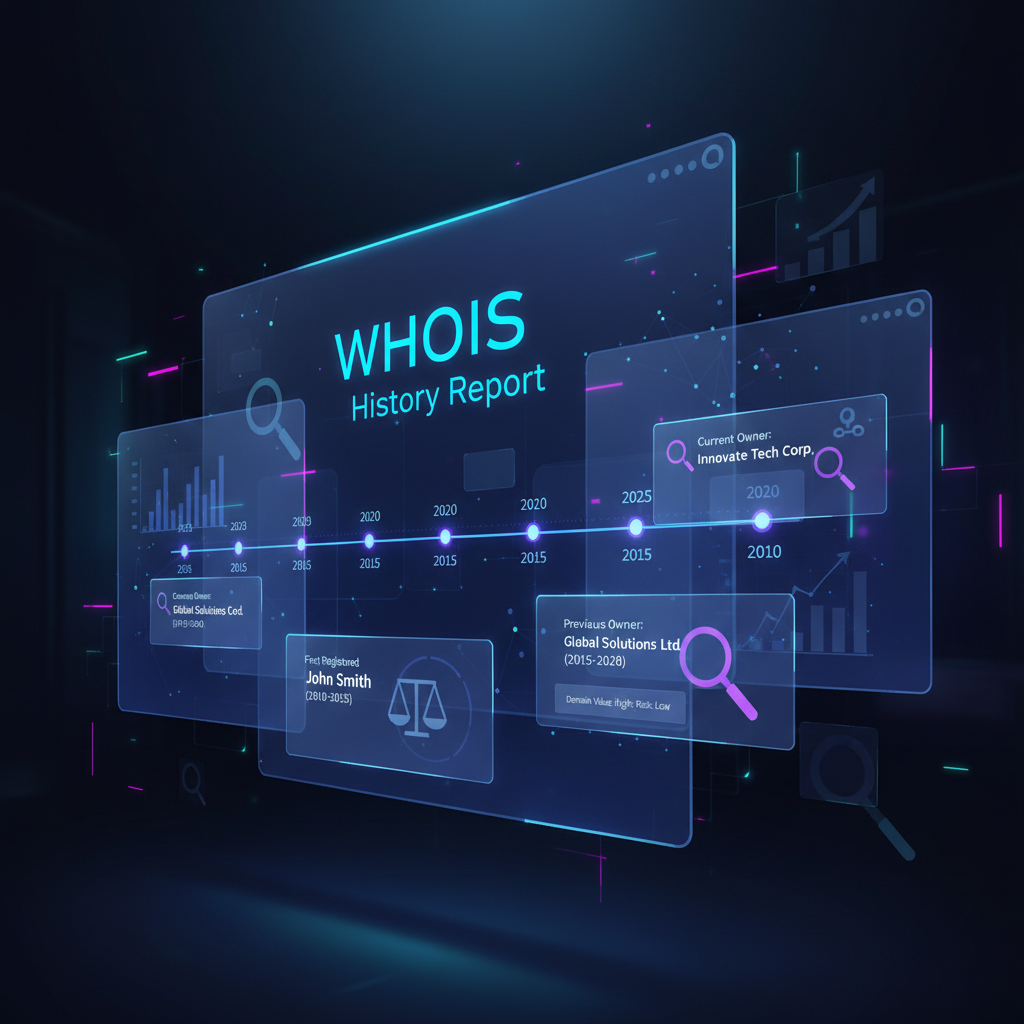
A primary application is ownership verification through historical WHOIS analysis. By examining ownership patterns over sequential WHOIS snapshots, procurement teams detect frequent transfers or registrant churn—red flags for laundering or abuse. Domain laundering attempts to obscure origin or sanitize poor reputations via rapid resale. Frequent ownership changes correlate strongly with domains rented for malicious activity or embroiled in legal disputes. Historical WHOIS archives from tools like DomainTools or SecurityTrails provide forensic visibility into these patterns, helping to filter unstable assets.
Another critical risk heuristic is recent registration date. Domains registered only days or weeks prior lack a meaningful trust history, often surfacing on threat intelligence feeds or reputation blacklists. Their short lifespan and high volatility increase susceptibility to phishing, spam campaigns, or DNS hijacking testing. Security architects treat such domains as higher risk, often requiring intensified vetting or outright rejection, especially where SSL certification depends on stable registrations.
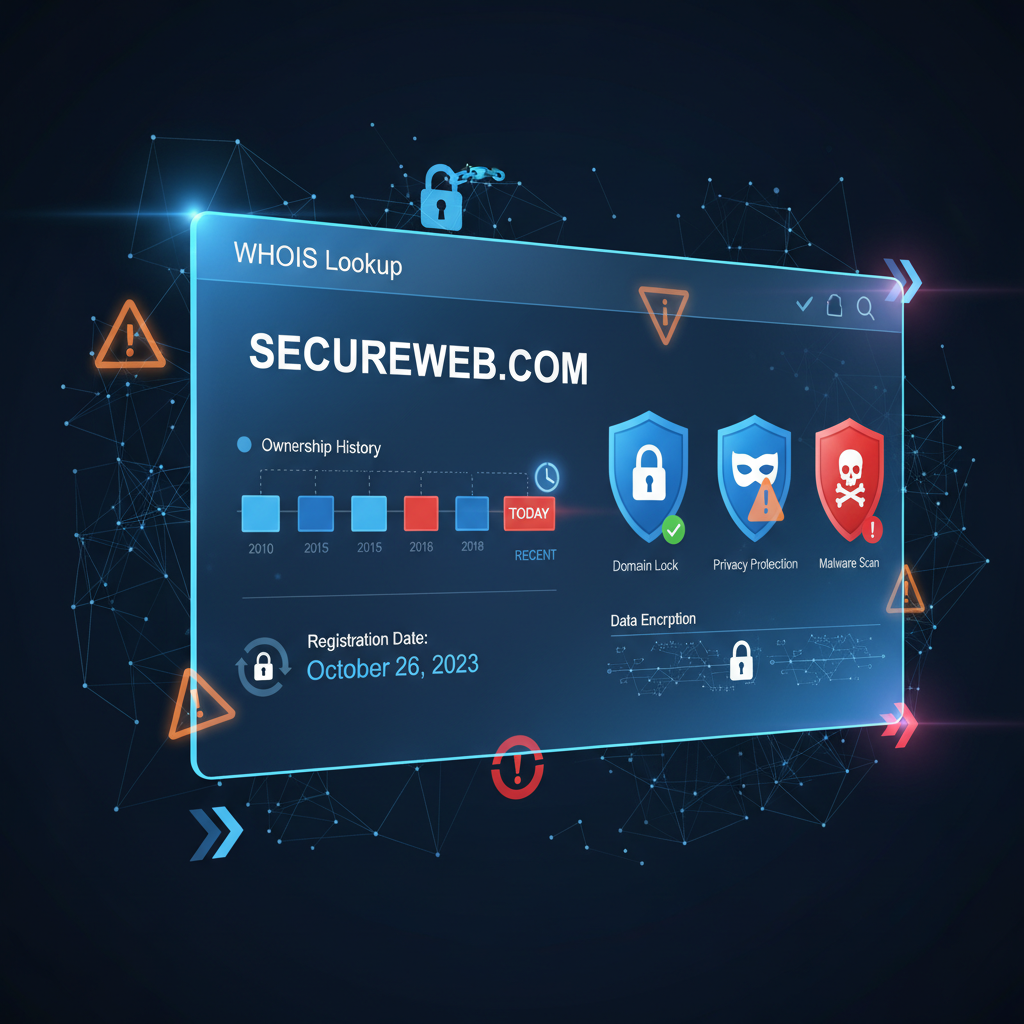
Privacy protection services introduce nuanced challenges. While protecting registrant privacy against spam and complying with regulations, these proxies also enable malicious masking of ownership changes and complicate hijacking detection. Attackers exploit them to conceal control shifts, frustrating incident responders and automated validation. Organizations must balance privacy and transparency, favoring privacy services with vendor vetting or requiring registrant disclosure under controlled conditions. Evolving ICANN policies on WHOIS privacy reflect this tension.
Beyond ownership data, WHOIS metadata acts as a diagnostic tool for DNS anomalies. Discrepancies between WHOIS contacts and active DNS zones hint at misconfiguration or abandonment, while mismatches between registry and delegated name servers signal possible spoofing or takeover. Flagging such divergences preserves network security posture by proactively preventing resolution failures, degraded user experiences, and invalid SSL certificates.
Neglecting WHOIS analysis before acquisition risks domain control loss via hidden ownership chains or expiry. DNS misconfigurations from stale contacts induce cascading failures discovered post-deployment. SSL issuance failures arise when CAs detect registration anomalies, delaying renewals or triggering revocations. Intellectual property disputes grow from overlooked registrant conflicts or expired domain theft, incurring costly legal battles and brand harm.
Production environments increasingly embed automated WHOIS checks within Continuous Integration/Continuous Deployment (CI/CD) pipelines, managing domain-reliant services. Extraction and parsing tools flag anonymized registrants, unusual renewal windows, or contact inconsistencies, triggering manual review before acquisition or rollout. This reduces infrastructure risk and enforces compliance with cyber risk governance.
For instance, a global backend service provider integrated WHOIS verification in its DNS provisioning pipeline, reducing domain-related incidents by 25% in one year by blocking new, unvetted domains. This investment in tooling and policies enhanced operational resilience and averted DNS outages and certificate renewal failures.
In summary, practical domain acquisition demands comprehensive WHOIS mastery. Through red flag identification, engineers enforce domain trust, maintain DNS stability, and uphold compliance vital to secure, reliable systems.
Identifying WHOIS Red Flags and Their Technical Implications
Building upon WHOIS’s operational role, we now dissect specific red flag patterns and their systemic effects. WHOIS records encode lifecycle telemetry—registrant identities, registration and expiration times, registrar changes, and name server delegations—that critically impact security and reliability. Their detailed analysis transcends simple fraud detection, revealing nuanced signals predictive of domain hijacking, DNS anomalies, and reliability degradation.
WHOIS entries serve as authoritative checkpoints in registrar transfers, renewals, and ownership disputes. Abrupt WHOIS shifts propagate DNS inconsistencies, TLS validation failures, or exposure to attacker control. Additionally, WHOIS histories frame trust assumptions underlying DNS resolution; anomalous or volatile WHOIS data disrupt reputation algorithms, degrading service quality or increasing suspicion.
Importantly, WHOIS red flags detect abuse earlier than passive DNS or HTTP traffic analysis by linking operational changes with security anomalies. This bridging of lifecycle management and anomaly detection equips domain purchasers and architects with actionable intelligence that complements runtime telemetry. The following sections analyze key WHOIS red flags, their mechanisms, and technical ramifications.
Frequent Ownership Changes Indicating Domain Instability
Among WHOIS red flags, rapid or repeated registrant changes rank highest for indicating instability or abuse. Domains cycling through multiple owners in short intervals often point to laundering schemes or cybercrime infrastructure churn.
Technical Signals of Ownership Volatility
WHOIS records revealing multiple registrant changes within weeks or months suggest attempts to obscure provenance or reset reputation. Changes in registrant names, emails, organizations, or registrar transfers—especially involving reseller chains—disrupt attribution and inflate operational risk. Attackers exploit compromised credentials or reseller networks to cycle domain control, undermining static reputation lists and resetting domain trust.
Operational and Security Implications
Frequent ownership transitions destabilize DNS configurations by prompting registrar or DNS hosting changes. Incomplete DNS migrations or propagation delays cause intermittent resolution failures or degraded latency. TLS certificate workflows falter as CAs require stable registrant data for domain control validation; volatile ownership triggers manual vetting or refusal, delaying HTTPS issuance and exposing services to trust warnings or man-in-the-middle attacks.
Downstream, client and security systems increasingly incorporate WHOIS ownership stability into domain reputation scoring. Domains with churned registrant histories face elevated suspicion, harming brand integrity and user trust across APIs, integrations, or frontend services relying on these domains.
Nuance and Correlation Considerations
Not all frequent transfers indicate abuse. Corporate reorganizations, asset sales, or legitimate reseller activities also cause registrant changes. Hence, frequency alone is insufficient; correlation with WHOIS metadata like registrar behavior, domain age, privacy service usage, and DNS stability is essential to discriminate malicious from benign changes.
Regional registrar policies modulate detection thresholds. For example, jurisdictions with specific transfer rules or grace periods affect ownership volatility interpretation. Incorporating policy context prevents false positives and enriches domain risk models.
Engineering Scenario Example
Consider a data pipeline orchestration domain implicated in rapid ownership churn following acquisition by a reseller network. DNS records shifted concurrently, causing intermittent job scheduler failures impacting downstream ETL workflows. TLS certificate renewals were delayed pending owner verification, triggering client API errors and degraded data freshness. This operational instability traced back to WHOIS volatility underscored ownership permanence as a service reliability factor.
Understanding ownership volatility connects naturally to domain recency and privacy concerns, the next critical dimensions in WHOIS risk assessment.
Recent Domain Registrations as a Signal of Risk
Domain age—captured in WHOIS registration timestamps—is a key trust proxy widely employed in risk modeling by fraud detection, API security, and email filtering systems. Newly registered domains (NRDs) pose elevated operational uncertainty due to minimal behavioral history.
Domain Age as a Proxy for Trustworthiness
WHOIS creation dates establish domain legitimacy in time. Trust and reputation engines treat domain age as a strong signal to distinguish permanent infrastructure from transient or fraudulent assets. Domains under several months old are statistically correlated with higher incidence of phishing, malware hosting, or malicious DNS configurations.
Challenges of New Registrations
New domains lack historical activity for behavioral baseline analysis, weakening automated threat classification. This opacity compels heightened suspicion until sufficient telemetry accrues. Operationally, new registrations are more prone to DNS misconfigurations originating from default registrar templates or misapplied delegation steps, causing availability disruptions. Malicious actors exploit these windows to deploy ephemeral infrastructure supporting short campaigns, reducing risk exposure.
Economic incentives drive automated mass registration of disposable domains for spam, phishing, or command-and-control ladders. Many remain unrenewed, contributing to domain churn and complicating long-term infrastructure stability.
Fraudulent Patterns Linked to Recent Registrations
Newly registered domains frequently interface with fast flux arrangements—frequent changes in DNS and IP mappings—to evade takedown and persistence attempts. Combining WHOIS age data with passive DNS monitoring enhances detection of such evasive abuse infrastructures.
Regional and Policy Context
Registrar validation policies vary by region, affecting domain creation rigor. Local regulations referenced by terms such as “red flag warning san diego” or “red flag warning massachusetts” illustrate differing enforcement that modulates risk filtering thresholds. Accounting for these regional nuances prevents misclassification and sharpens acquisition decisions.
Detection Strategies
Robust domain risk scoring fuses WHOIS creation timestamps with DNS volatility and anomaly detection. Early-warning frameworks flag recently registered domains exhibiting suspicious DNS patterns or resolver inconsistencies, facilitating preemptive scrutiny prior to integration into critical infrastructure.
This focus on domain recency naturally extends to privacy protection evaluation, a dual-use WHOIS feature with both legal and security implications discussed next.
Privacy Protection Services and Their Potential Misuse
Privacy protection services obscure registrant details in WHOIS records, aiming to safeguard personal data and comply with privacy regulations such as GDPR. However, despite legitimate purposes, these proxies can also mask malicious activity, making them important contextual WHOIS red flags that require nuanced analysis.
Legitimate Motivations for Privacy Services
Privacy services reduce exposure to spam, unsolicited contacts, and comply with global data protection mandates. They shield individuals and organizations from direct public visibility, preserving confidentiality essential for many registrants.
Abuse and Security Implications
From a security vantage, privacy services convert transparent attribution into opaque anonymity. This impairs incident response, hinders forensic traceability, and complicates law enforcement investigations. Proxy contact details are generic, increasing challenges in domain recovery and transfer disputes.
Furthermore, privacy protection raises domain hijacking risks. Attackers exploit generic registrant proxies to impersonate owners in registrar interactions, leveraging social engineering to effect unauthorized transfers. SSL certificate issuance protocols that require ownership verification are complicated by the masking of registrant identities, risking issuance delays or denial.
Patterns and Exploitation Techniques
Bulk registrations with privacy services facilitate malicious infrastructures supporting phishing, spam, and malware. Abuse is concentrated in lenient registrar environments identifiable by terms like “red flag warning nebraska” or “red flag warning virginia,” illustrating regional enforcement disparities. Here, privacy flags serve primarily as heuristics requiring correlation with DNS anomalies or external threat intelligence to improve detection fidelity.
Balancing Privacy and Security
The privacy-versus-transparency trade-off demands multi-dimensional analysis. Overly broad flagging penalizes legitimate users; underscrutiny permits abuse. Security architects should integrate WHOIS privacy data with DNS behavior, reputation metrics, and historical ownership changes, refining distinctions between benign and malicious masking.
Tooling that blends privacy metadata with DNS anomaly detection and registrar trust scores enhances context and reduces false positives. For authoritative guidance, see ICANN’s privacy and WHOIS service provider FAQs.
This balance sets the stage for interpreting WHOIS indicators predictive of hijacking and DNS anomalies, the topic of the next section.
Indicators of Domain Hijacking and DNS Anomalies in WHOIS
WHOIS data offers pivotal signals revealing domain hijacking attempts and DNS configuration issues. Systematic analysis of registrant changes, registrar inconsistencies, and archived WHOIS histories enables early detection of malicious domain seizures and their operational impacts.
Detecting Hijacking Through WHOIS Patterns
Technical markers of domain hijacking manifest as abrupt registrant or registrar changes deviating sharply from historical norms. Examples include sudden transfers from longstanding reputable registrars to obscure or untrusted operators, or conflicting registrant data across trusted and cached WHOIS records.
Specific anomaly patterns:
- Registrant attributes (name, email, organization) suddenly differing without legitimate transactional records
- Registrar changes inconsistent with documented administrative actions
- Divergences between live WHOIS data and third-party archive snapshots indicating possible unauthorized updates
Attack Mechanisms
Hijackers exploit social engineering targeting registrar support teams to impersonate legitimate registrants. Credential compromise of registrant or registrar accounts enables unauthorized control changes. Weaknesses in registrar identity verification processes exacerbate risk.
DNS Impact of WHOIS Anomalies
Hijacked domains often exhibit DNS anomalies such as name server configurations diverging from authorized infrastructure, causing resolution failures or redirects to malicious endpoints. Sudden DNS record changes lead to service outages, degrade TLS chains, and enable phishing or malware distribution campaigns.
Operationally, TLS trust is compromised, prompting certificate revocations or reissuance delays. Reputation systems flag hijacked domains accelerating domain blacklisting, impairing email deliverability and API integration trust.
Advanced Detection Approaches
Effective detection combines WHOIS historical analyses with passive DNS monitoring, correlating timing of ownership changes with DNS record shifts for higher detection specificity. Machine learning classifiers ingest comprehensive WHOIS metadata—change frequencies, registrar reputations, privacy usage—paired with DNS metrics to generate actionable risk scores.
Regional registry and enforcement contexts, exemplified by “red flag warning colorado” and “red flag warning iowa,” influence local domain security robustness. In Colorado, rapid ownership changes correlated with DNS inconsistencies precipitated hijacking incidents. Iowa registries implemented automated WHOIS anomaly alerts, reducing response times, demonstrating how local infrastructure and policy maturity shape domain risk.
Integration with Domain Security Frameworks
Embedding WHOIS red flag detection within broader domain security constructs—DNSSEC validation, certificate transparency monitoring, passive DNS scanning—strengthens defense-in-depth. This integrated approach minimizes hijacking impact and DNS-based exploits affecting upstream service reliability. For background, consult RFC 4033 on DNSSEC architecture.
By mapping WHOIS signals to DNS and cryptographic trust domains, organizations gain comprehensive situational awareness essential for proactive domain protection.
Tools and Techniques for Analyzing WHOIS Data Effectively
Automated WHOIS Analysis Tools and Their Capabilities
Scaling domain acquisition workflows necessitates automated WHOIS analysis tools capable of bulk querying, parsing heterogeneous data, and synthesizing multi-dimensional threat signals, while grappling with privacy constraints and dynamic data.
Bulk querying frameworks orchestrate parallel API or WHOIS port requests across registrars and TLDs, respecting rate limits via queuing, back-off algorithms, and proxy diversification. Emerging RDAP protocols standardize data access but parsing remains complex due to diverse registrar output formats and inconsistent data fields.
Parsing challenges include interpreting unstructured text, varying field nomenclature, and coping with missing or malformed entries. Hybrid parsing solutions combine regex patterns with machine learning-based entity recognition to extract ownership, timestamps, status flags, and contact information into normalized datasets. Despite sophistication, incomplete or anomalous responses result in elevated false positives necessitating human oversight.
Red flag detection algorithms focus on pattern recognition:
- Identifying frequent ownership changes over short windows
- Detecting bursts of recent bulk registrations indicative of fraud waves
- Highlighting privacy protection service abuse affecting transparency
To enhance signal richness, many tools integrate DNS anomaly modules assessing mismatches in name servers, DNS records linked to known malicious infrastructure, or unusual TTL patterns. Cross-validation between WHOIS and DNS enriches interpretive context.
Advanced approaches utilize supervised machine learning trained on historic abuse datasets coupled with heuristics, enabling automatic flagging of high-risk domains by combining multiple indicators. Balancing false positive rates demands configurable thresholds reflecting organizational risk tolerance.
Privacy services, registrar restrictions, and staleness of WHOIS data limit precision; thus, tools serve as risk triage accelerators rather than definitive arbiters.
Operational best practices adopt automated tools for initial filtering, prioritizing suspicious domains for human review. A global cybersecurity firm, for example, combined WHOIS-DNS anomaly correlation to reduce misclassifications by 30%, detecting over 500 hijacked domains over a year. This illustrates the efficacy and limits of automation grounded in diverse data.
Combining Automated Flags with Manual Verification
Despite automation’s efficiencies, WHOIS complexity and domain lifecycle dynamics generate both false positives and negatives that mandate human expert involvement.
Manual verification involves:
- Cross-referencing WHOIS archives to establish temporal ownership patterns beyond single snapshots
- Complementing WHOIS data with passive DNS history, registrar reputation, and certificate transparency logs for multidimensional context
- Assessing privacy proxy reputations and usage patterns to distinguish legitimate from malicious masking
- Investigating registrant consistency over time to confirm or refute suspicions of laundering or hijacking
- Recognizing legitimate transactions such as corporate mergers or infrastructure migrations that may superficially resemble abuse
Manual scrutiny also mitigates overreliance on heuristics, differentiating between false alarms and genuine threats grounded in deep domain context.
Operational workflows integrate automated detection with manual triage by passing flagged domains above risk thresholds to analysts armed with comprehensive domain dossiers aggregating WHOIS snapshots, historic archives, DNS data, and external intelligence. This hybrid approach combines speed and scale with analytic depth, reducing erroneous denials and improving detection rates.
A major registrar’s adoption of this hybrid model resulted in a 45% drop in erroneous domain de-listings and a 25% improvement in abuse detection, underscoring the indispensable role of expert review alongside automation.
Understanding common WHOIS red flags and tool-assisted analysis equips engineers to deploy acquisition pipelines with robust trust frameworks balancing automation and contextual judgment.
Operational Considerations and Risk Management When Buying Domains
Moving from red flag detection to operationalization, domain acquisition requires integrating WHOIS insights into organization-wide risk frameworks that guide technology and security teams in informed decision-making.
WHOIS signals should not be interpreted as binary fraud indicators but rather integrated within probabilistic risk models. These models weigh factors such as ownership change velocity, registrant consistency, and privacy service usage to classify domains along graded trust spectra. For example, rapid ownership transfers associate with up to 35% higher incidence of post-purchase abuse in empirical domain intelligence data.
Privacy proxies require heuristic cross-validation against DNS anomalies, IP reputations, and historical abuse data to prevent false positives that might exclude legitimate registrants. This nuanced boundary-setting ensures operational efficiency without compromising security.
WHOIS red flags often correlate with DNS health indicators—frequent name server changes, TTL anomalies, misaligned DNSSEC configurations—that jointly signal subversion or residual compromise. Real-time systems that integrate WHOIS risk scores with DNS integrity checks enhance proactive domain vetting. For example, a content delivery network implementation combining these signals reduced domain-related outages by 20%, demonstrating how layered observability fortifies infrastructure reliability. See the Kubernetes DNS and Service Discovery documentation for operational parallels.
Risk thresholds must align with organizational tolerance. Different projects vary in acceptable risk—from zero-tolerance frameworks for critical APIs to monitored acceptance for marketing domains. Incorporating business context—intended use, scale, regulatory requirements—helps calibrate acceptance policies, balancing security and agility.
Engineering acquisition pipelines that treat WHOIS red flags as dimensional risk inputs facilitate a shift from static due diligence to dynamic, self-tuning risk models, embedding resilience into domain trust.
Transitioning from acquisition to post-purchase, organizations must maintain vigilance through robust governance frameworks.
Setting Trust Boundaries Based on WHOIS Red Flags
Effective trust boundaries around WHOIS-derived risk require continuous, dynamic risk scoring that evolves as new data and threat intelligence emerge. Static one-time checks fail to capture ongoing domain lifecycle developments.
A risk scorecard framework assigns quantitative weights to individual red flags, such as:
- Unexplained abrupt ownership or registrar changes
- Privacy proxy usage linked with known malicious clusters
- Mismatched creation or expiration dates inconsistent with domain use cases
- Registrant country incongruities relative to DNS hosting localization
Domains can thus be stratified into tiers—trusted, enhanced scrutiny, or blocklist candidates—guiding operational workflows. For instance, financial services applying strict WHOIS-based trust models reduced domain spoofing incidents by 40%.
Automated workflows can trigger escalations—manual verification, passive DNS continuous monitoring, registrant email confirmation, external reputation checks—for intermediate-risk domains. A multinational e-commerce platform implemented such gating controls for bulk domain procurement, achieving notable phishing incident reduction.
Balancing security and operational throughput demands carefully calibrated trust boundaries that avoid acquisition bottlenecks or downstream remediation overhead.
Integrating WHOIS red flags into continuous domain health dashboards supports both proactive acquisition vetting and retrospective forensic investigations. This aligns with cyber governance frameworks like MITRE ATT&CK for incident response and threat intelligence.
Operationalizing trust boundaries is a prerequisite for sustainable domain lifecycle risk management.
Mitigating Risks from Problematic Domains Post-Purchase
Despite upfront diligence, domains remain vulnerable post-purchase due to latent compromises or emergent threats. A comprehensive lifecycle approach enforces continuous observation and rapid response anchored in WHOIS and DNS telemetry.
Persistent WHOIS monitoring detects ownership changes, unexpected contact updates, or registrar status shifts signaling compromise or administrative errors. Real-time WHOIS polling combined with webhook notifications enable incident teams to react swiftly, reducing hijacking response times from days to hours, as evidenced by major financial institutions.
Parallel DNS integrity monitoring tracks unauthorized name server swaps, record drifts, or TTL anomalies—early indicators of misuse preceding public blacklisting. DNSSEC validation further hardens domains against spoofing or cache poisoning, with global SaaS operators reporting zero DNS disruptions in a year following such integrations tethered to WHOIS alerts.
Operational incident response requires domain-specific runbooks encompassing registrar account controls, mandatory multi-factor authentication, registrar lock configurations, and established escalation matrices. Practicing scenario drills around WHOIS red flag evolutions enhances readiness and coordination across security, network, and legal teams.
Augmenting with external threat intelligence—malware distribution feeds, localized cyber risk reports like “red flag warning california today”—infuses geo-contextual insights, targeting monitoring where exposure is highest.
Ultimately, managing domain risk post-acquisition demands vigilant observability, procedural rigor, and adaptive defenses anchored in WHOIS-driven intelligence to preserve the integrity of digital assets.
Key Takeaways
Analyzing WHOIS data is a foundational step in engineering domain acquisition and management with security rigor. It enables detection of risks—fraud, hijacking, unstable ownership—that threaten DNS stability, SSL trust, and intellectual property.
- Frequent ownership changes indicate instability: Rapid registrant turnovers highlight churn, laundering, or hijacking threats affecting long-term domain trust and service reliability.
- Recent registrations imply immature, risky assets: New domains lack reputational history, increasing vulnerability to abuse and operational misconfigurations.
- Privacy protections mask true ownership: While necessary for legal and privacy reasons, proxy registrants complicate validation and incident response, warranting layered verification.
- WHOIS-DNS discrepancies signal compromise: Inconsistencies between registration data and DNS configurations often herald domain attacks or misconfigurations impacting system availability.
- Automated tools scale analysis but require context: Parsers and classifiers must be coupled with manual review to interpret obfuscated or ambiguous WHOIS data accurately.
A mature engineering approach balances automation and human insight, integrating WHOIS analytics as a dynamic, multi-dimensional input to domain trust models underpinning resilient infrastructure.
Conclusion
Mastering WHOIS data and its nuanced red flags is imperative for securing domain acquisitions and maintaining robust internet infrastructure. Ownership history, registration timelines, privacy usage, and indicators of hijacking or DNS anomalies offer composite signals that transcend static verification, delivering deep domain lifecycle intelligence.
Integrating automated WHOIS tooling with expert validation cultivates adaptive risk frameworks that harmonize operational efficiency with stringent security demands. As domain trust becomes central to DNS stability, SSL validation, and digital reputation, engineering teams must confront WHOIS complexity rather than ignore it.
Looking ahead, as systems scale, decentralize, and integrate diverse domain-dependent services, the challenge evolves from isolated vetting to continuous lifecycle governance. The question engineers face is how to design observability and control frameworks that surface WHOIS-derived risks in real time, correlate them with DNS and cryptographic telemetry, and enable confident, automated trust decisions without compromising agility.
Embracing this layered, dynamic approach will define the resilience and trustworthiness of digital operations amid increasingly sophisticated domain-based threats.