Introduction to WebAssembly and Its Evolution
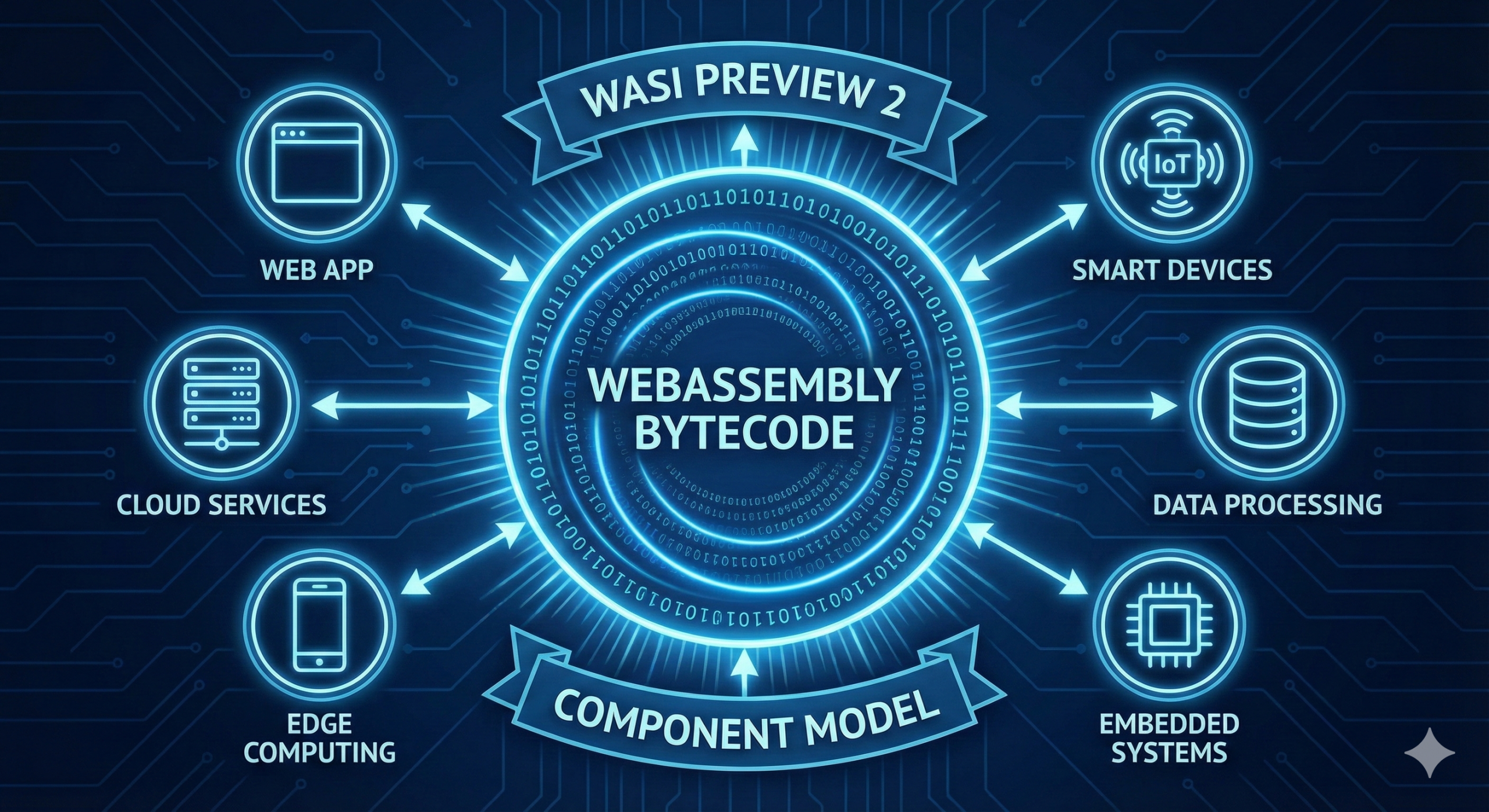
WebAssembly (Wasm) has undergone a tremendous evolution since its inception. Initially designed to bring near-native performance to web browsers, Wasm is now expanding its reach into cloud computing, edge devices, and even embedded systems. This transformation is driven by constant innovations in technology and the growing need for secure, efficient, and cross-platform solutions. In this article, we delve into the latest advancements with WASI Preview 2 and the WebAssembly Component Model, exploring the difference between WASI Preview 2 and Component Model in practice and their implications for modern developers.
What is WASI and Its Role in WebAssembly
WASI, or WebAssembly System Interface, is the layer that provides a standardized interface between WebAssembly modules and the underlying operating system. By offering system-level abstractions, WASI facilitates enhanced security and performance, ensuring that Wasm is not confined solely to the browser environment. Its design emphasizes stability and backward compatibility, allowing developers to build sophisticated applications with confidence. The evolution of WASI is critical to achieving the desired portability and safe system interactions in multiple environments.
Introducing WASI Preview 2: Key Features and Enhancements
WASI Preview 2 represents a pivotal step in making WebAssembly ready for production applications. This update not only refines the API, steering clear of the outdated POSIX-style approach, but it also introduces modern, secure interfaces that are tailored specifically to Wasm’s requirements. Some of the key features include:
- Stable and Consistent API: Ensures backward compatibility and reliability for production workloads.
- Enhanced Security: Limits unauthorized access to system resources, thus providing a robust safety layer.
- Optimized for Modern Workloads: Provides interfaces that are better suited for cloud and edge environments.
For more detailed insights, you can refer to the article on Why WASI Preview 2 Makes WebAssembly Production Ready.
Understanding the WebAssembly Component Model
The WebAssembly Component Model is designed to address a crucial aspect of modern software development: language interoperability. By defining a Canonical ABI (Application Binary Interface), this model standardizes communication between Wasm components, even if they are written in different programming languages. This approach eliminates the need for developers to worry about direct memory access issues, reducing potential security vulnerabilities and enhancing overall system reliability.
Developers now have the flexibility to build applications that mix Rust, Python, JavaScript, and various other languages, harnessing the best features each language has to offer. The end result is a robust, modular architecture that stands ready for diverse deployment scenarios. For further reading on this topic, see Polyglot Programming with WebAssembly: A Practical Approach on InfoQ.
Comparing WASI Preview 2 and the WebAssembly Component Model
While both WASI Preview 2 and the WebAssembly Component Model aim to enhance the capabilities of Wasm, they serve different yet complementary purposes. The key difference between WASI Preview 2 and Component Model in practice lies in their focus areas:
- WASI Preview 2: Focuses on providing a standardized set of system interfaces. It improves the production readiness of Wasm by offering a stable, secure, and efficient API for interacting with system resources.
- WebAssembly Component Model: Is locked on interoperability. It facilitates the composition of Wasm modules written in different languages and ensures standardized communication between these components.
In practice, using these tools in conjunction allows developers to build sophisticated, secure, and high-performance applications that effectively leverage the strengths of multiple languages and platforms. The insights from The New Stack clearly illustrate these practical differences.
Real-World Applications: Utilizing Extended Capabilities
The joint impact of WASI Preview 2 and the Component Model has reverberated across various industries. Their collaborative use is particularly influential in developing secure, portable, and high-performance cloud and edge applications. Several noteworthy examples include:
- Serverless Computing: Platforms such as Fermyon’s Spin 2.0 have integrated these advancements to facilitate serverless environments where components written in different languages work together seamlessly. More details can be found in the InfoQ article on Fermyon Spin 2.0. [https://blog.whoisjsonapi.com/embracing-serverless-computing-a-comprehensive-guide-to-design-architectures-and-best-practices/]
- Cloud-Native Applications: The enhanced portability means that applications can now run efficiently across cloud servers, edge devices, and even embedded systems with minimal modifications. The improvements mentioned in WASI 0.2: Unlocking WebAssembly’s Promise Outside the Browser emphasize these benefits. [https://blog.whoisjsonapi.com/implementing-continuous-integration-and-deployment-pipelines-for-microservices]
- Distributed Systems: Companies like Cosmonic are leveraging the componentized structure to build vendor-neutral, distributed applications. This ensures that systems remain resilient, scalable, and secure. Read more at Cosmonic Componentizes wasmCloud Ecosystem. [https://blog.whoisjsonapi.com/building-secure-and-efficient-mcp-servers-a-comprehensive-guide]
Interoperability Improvements and Developer Benefits
One of the most enticing advantages of integrating WASI Preview 2 with the WebAssembly Component Model is the significant boost in interoperability. Developers are now empowered to:
- Create Polyglot Applications: By combining modules from different languages without sacrificing performance or security. [https://blog.whoisjsonapi.com/bridging-the-gap-integrating-generative-and-agentic-ai-in-software-engineering]
- Increase Code Reusability and Efficiency: The modular design permits the reuse of components in varied contexts, accelerating development cycles.
- Enhance Security: The inherent safeguards within the Component Model reduce risks of memory-related vulnerabilities. [https://blog.whoisjsonapi.com/building-secure-and-efficient-mcp-servers-a-comprehensive-guide]
These improvements streamline the development process and open new avenues for innovation, especially in the context of microservices and distributed architectures.
Challenges and Considerations for Implementing WASI Preview 2 and the WebAssembly Component Model
Despite the evident benefits, there are challenges that developers must consider when adopting these technologies:
- Learning Curve: Transitioning to WebAssembly and its new interfaces requires time and effort, particularly for developers accustomed to traditional system programming paradigms.
- Integration with Legacy Systems: Ensuring seamless interaction between Wasm modules and existing systems may need additional adaptation layers. [https://blog.whoisjsonapi.com/implementing-continuous-integration-and-deployment-pipelines-for-microservices]
- Tooling and Ecosystem Maturity: While rapidly evolving, the ecosystem around WASI Preview 2 and the Component Model is still maturing. Developers may need to adapt as the technology evolves.
Addressing these considerations proactively is key to leveraging the full potential of these technologies.
Future Outlook: The Path Ahead for WebAssembly
The future of WebAssembly is bright, with rapid advancements promising even more robust and versatile applications. The ongoing development of WASI and the Component Model is expected to address current limitations and further integrate Wasm into non-browser contexts. Experts predict an exponential increase in adoption across numerous sectors, including cloud computing, Internet of Things (IoT), and mobile applications.
As WebAssembly continues to evolve, staying informed about these changes and understanding the difference between WASI Preview 2 and Component Model in practice will be essential for developers seeking to harness the power of this groundbreaking technology.
Frequently Asked Questions (FAQ)
What is the primary purpose of WASI Preview 2?
WASI Preview 2 provides a stable and secure set of system interfaces that enable WebAssembly modules to interact efficiently with underlying system resources. It is a major step forward in making Wasm suitable for production use.
How does the WebAssembly Component Model improve interoperability?
The Component Model standardizes communication between Wasm components through a Canonical ABI. This allows modules written in different languages to interact securely and efficiently without direct memory access, enhancing both interoperability and security.
Can I integrate these technologies with legacy systems?
Yes, although integration may require additional adaptation layers. Understanding the nuances of both WASI Preview 2 and the Component Model is crucial when merging modern Wasm applications with legacy systems.
Conclusion: Leveraging the Power of WASI Preview 2 and WebAssembly Components
In conclusion, the continuous evolution of WebAssembly, particularly through innovations like WASI Preview 2 and the WebAssembly Component Model, is paving the way for a new era of highly interoperable and efficient applications. By addressing the difference between WASI Preview 2 and Component Model in practice, developers can build secure, portable, and efficient systems that span multiple environments—from cloud servers to edge devices.
The integration of these technologies not only enhances performance and security but also unlocks the potential for polyglot development, where the best aspects of various programming languages can be combined in a single application. As the ecosystem matures, staying updated with these advancements will empower developers to harness WebAssembly’s full potential and lead the next wave of technological innovation.
Embrace the journey, explore the evolving landscape of WebAssembly, and unlock a world of possibilities with WASI Preview 2 and WebAssembly components.