Key Takeaways
Newly registered domains represent a critical vector exploited by cybercriminals due to their inherent lack of historical reputation, minimal traceability, and high anonymity. This enables rapid deployment of malicious infrastructures—such as phishing sites, malware delivery points, and command-and-control (C2) nodes—that operate in the zero-day domain window before conventional detection mechanisms adapt. For engineers designing resilient security systems, mastering the nuanced abuse patterns of these domains and integrating domain-age–aware detection methods—including WHOIS monitoring, passive DNS correlation, and multi-factor reputation scoring—is essential to building adaptable defenses capable of early threat identification without sacrificing legitimate domain usability.
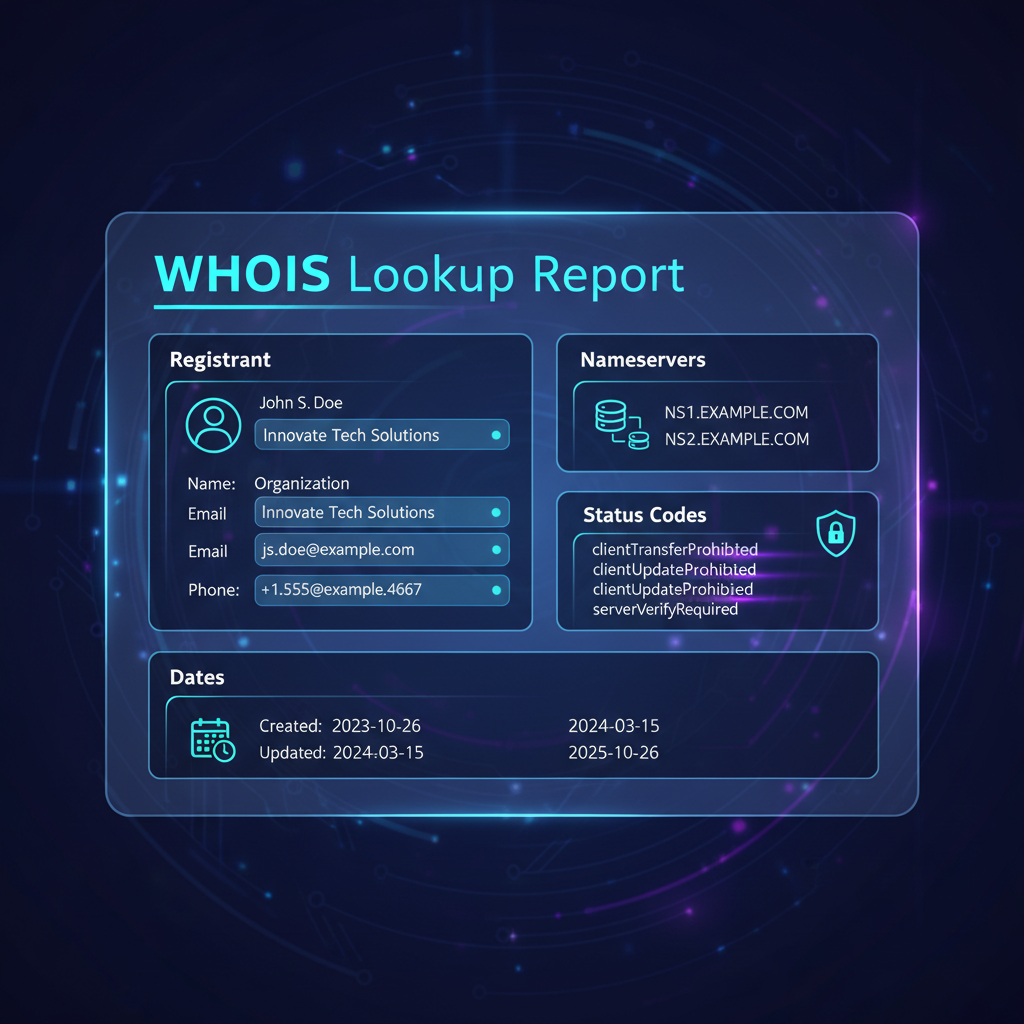
- Leverage WHOIS data for automated domain age monitoring: Continuously ingest WHOIS or RDAP records to identify domains registered within precise, configurable time windows, enabling proactive blocking or prioritization for enhanced inspection well before attackers scale operations with these new domains.
- Adopt phased trust models tied to domain age and behavioral history: Implement graduated security policies that restrict critical operations (e.g., authentication or payment flows) from domains in the initial zero-day phase, progressively relaxing controls as domains accumulate trustworthy behavior and metadata, balancing user experience against risk.
- Detect bulk domain registrations via registration metadata correlation: Analyze registrant contact details, IP addresses, and registration timestamps en masse to identify automated domain creation surges typical of botnet or phishing umbrella domains, facilitating preemptive threat disruption.
- Incorporate passive DNS feed analytics to enrich context: Use longitudinal DNS resolution data to detect anomalous behaviors such as rapid DNS record flips, sudden domain forwarding changes, or fast-flux techniques that signify malicious redirections or evasive infrastructure rotations.
- Design multi-signal domain reputation frameworks: Fuse domain age, WHOIS privacy status, DNS configurations, observed malicious activity, and TLD-specific abuse heuristics to lower false positives and enable dynamic, context-aware threat scoring across diverse operational scales and threat landscapes.
- Understand the operational trade-offs of blocking newly registered domains: Aggressive blocking effectively curbs abuse but risks collateral impact on legitimate new businesses and campaigns. Systems should incorporate allowlists or exception policies for verified domains, including those registered through reputable platforms like Hostinger domain registration, to mitigate disruption.
- Account for domain lifecycle complexities during transfers: Domain transfers, such as migrating a domain from Squarespace to Cloudflare, can induce temporary WHOIS inconsistencies, DNS resolution disruptions, and metadata propagation delays that may degrade detection visibility or inadvertently expand attack windows if not carefully managed.
- Monitor DNS anomalies including non-standard port usage and record types: Attackers increasingly exploit alternate DNS ports or obscure record types to evade signature detection—systems must profile DNS traffic behavior holistically, including DNS-over-HTTPS/eTLS variants and uncommon resource records (e.g., TXT records with embedded commands).
- Utilize domain lock and forwarding state monitoring for domain management anomalies: Abrupt changes in domain locking status or forwarding configurations often precede abuse campaigns or signal ongoing domain hijacking attempts, providing early indicators for rapid mitigation efforts.
- Factor evolving domain extension landscapes and namespace topology into heuristics: Attackers exploit recently introduced or less-monitored TLDs and ccTLDs (e.g., registering
.coor.co.ukvariants) to bypass traditional filtering conditioned on common extensions; detection models must dynamically update their domain extension databases and incorporate namespace proximity analyses to identify lookalike and homograph attacks.
By integrating these layered considerations, security architects and operations teams can develop highly adaptive detection and mitigation frameworks oriented toward the dynamic and evasive threat environment presented by newly registered domain abuse. The following sections delve deeper into abuse patterns, detection techniques, and architectural countermeasures tailored to these challenges.
Introduction
Newly registered domains constitute a pervasive blind spot in cybersecurity. Their status as zero-day assets—with zero historical telemetry or reputation—creates an exploitable gap for attackers to rapidly deploy phishing, malware delivery, and command-and-control infrastructures undetected. For engineers tasked with securing scalable and high-availability systems, the challenge lies in embedding domain-age–aware monitoring and dynamic policy enforcement into existing architectures, enabling precision detection that minimizes disruption to legitimate traffic.
This challenge demands an integrated technical approach combining timely WHOIS or RDAP ingestion, passive DNS anomaly detection, and reputation scoring calibrated against domain lifecycle complexities such as transfers and evolving domain extension ecosystems. Effective mitigation requires correlating bulk domain registration events, DNS resolution pattern anomalies, and domain forwarding behaviors while carefully calibrating trade-offs around false positives and operational impact. By articulating these interlocking technical considerations, this article equips engineers with actionable insights to fortify their defenses against the dynamic threat posed by newly registered domains.
Fundamentals of Newly Registered Domains in Cybersecurity
Definition and Characteristics of Newly Registered Domains
A newly registered domain is defined by its proximity in time to the domain creation date, typically referred to as the “zero-day domain” window. This phase begins at the moment a registration request is processed by an accredited registrar, followed by DNS provisioning and eventual global propagation. During this period—often spanning hours to a few days—the domain lacks accumulated telemetry, reputational signals, and meaningful metadata, distinguishing it fundamentally from aged domain entities.
Critically, these zero-day domains exhibit absent or minimal data across primary intelligence sources:
- WHOIS/Registration Data: Only an initial registration snapshot exists; no historical changes, transfer records, or verified ownership histories are available. Privacy redactions and GDPR compliance increasingly obscure registrant details, compounding attribution challenges.
- Passive DNS Records: No prior DNS queries or resolution history is recorded, limiting behavioral insights from network vantage points.
- Certificate Transparency Logs: Typically no SSL/TLS certificate issuance is recorded, preventing detection via certificate anomaly monitoring, a common defense for established domains.
- Threat Intelligence and Reputation Feeds: Absence from blacklists or abuse feeds until subsequent detection cycles conclude, creating a temporal detection gap.
The domain name length constraints (up to 253 ASCII characters), combined with the broadening pool of new generic top-level domains (gTLDs) such as .xyz, .club, and specialized extensions like .casino or .loan, expand the structural search space attackers traverse to craft deceptive, complex, or brand-imitative domains that evade simplistic pattern matching.
Attackers exploit registrar APIs provided by platforms such as Hostinger or Namecheap to automate mass domain registrations programmatically, enabling rapid domain portfolio expansion with minimal manual input. These domains either commence in dormant states awaiting activation or are immediately weaponized in ephemeral campaigns. This automation and volume overwhelm static blocklist mechanisms, which typically lag behind the operational tempo of attacker domain churn.
DNS protocol design further complicates defense. Given that DNS queries primarily use UDP on port 53 and DNS responses utilize a hierarchical, loosely authenticated namespace, anomaly detection requires sophisticated parsing of domain name encodings, Unicode homographs, and irregular DNS record manipulations. Newly minted domains—especially those on emergent or rare TLDs—introduce additional entropy that evades classical heuristic models trained on legacy .com, .net, or .org traffic.
Collectively, newly registered domains create a critical detection blind spot that exploits the gap between domain registration and reputation maturation, demanding detection systems that anticipate and incorporate lifecycle-aware telemetry across multiple technical dimensions.
Why Cybercriminals Favor Newly Registered Domains
Building on the foundational understanding of zero-day domain characteristics, we explore the attacker incentives and operational rationale behind newly registered domain exploitation. The clean slate these domains offer—free of negative reputation and historical association—provides attackers a temporal window during which threats can be executed with relative impunity.
Cybercriminals favor bulk domain registrations to acquire large pools of disposable domains that can rapidly cycle through malicious campaigns. This portfolio approach dilutes detection efficacy and takedown effectiveness since blacklists targeting one domain are circumvented by rotation to others in the batch. Registrar APIs and automated tooling accelerate bulk acquisition, enabling hundreds or thousands of domains to be provisioned in minutes.
Domain forwarding compounds evasion capabilities. Attackers use multi-hop redirections from newly registered domains to obfuscate the final payload server, fragmenting the attack surface and complicating static URL or domain blocklisting. Locked domain statuses—typically a security measure—paradoxically hinder defenders by delaying takedown or transfer operations, preserving attacker control over malicious infrastructure longer.
Zero-day domains support ultra-fast campaign deployment: domains can be weaponized minutes after registration, enabling burst-mode phishing or malware campaigns that saturate targeted systems before defenders register the domain’s malicious nature. Reputation-based filters reliant on accumulated telemetry are inherently inadequate in this early window.
Domain lifecycle complexities also serve attacker interests. Transfers between platforms (e.g., migrating a domain from Squarespace to Cloudflare) introduce WHOIS inconsistencies and DNS resolution delays exploitable as transient invisibility periods. Additionally, attackers use reseller ecosystems and registrar hopping to further evade enforcement.
Lookalike strategies, incorporating typosquatting and Unicode homographs, utilize newly registered domains to mimic legitimate brand names closely, increasing the challenge of automated or heuristic filtering. These tactics increase false negatives and user deception risks.
Consequently, defenders face trade-offs: blocking zero-day domains aggressively prevents attacks but disrupts legitimate new business activities and campaigns often launched on freshly registered domains. The optimal approach balances nuanced anomaly detection algorithms, contextual signals, and graduated enforcement policies.
This rationale underscores the necessity to transition from awareness of attacker motivations into the technical details of domain lifecycle events and the architectural strategies for incorporating domain age intelligence into security systems.
Common Abuse Patterns of Newly Registered Domains by Cybercriminals
Newly registered domains underpin a spectrum of abuse cases enabled by their zero reputation and rapid registration turnaround. Attackers leverage registrar portals—including global providers and localized platforms (e.g., Hostinger and regional services like pk domain registration)—to programmatically acquire high volumes of domains at low cost and with minimal scrutiny.
These domains serve as transient infrastructure nodes supporting reconnaissance, initial payload hosting, and command relay operations. Their lack of prior signals enables evasion of signature and reputation-based filters.
Via DNS management automation—including forwarding, locking, and bulk configuration updates—attackers dynamically modify domain state to frustrate blacklisting and takedown. Fast flux techniques, involving rapid rotation of IP address mappings to single domains, further degrade the efficacy of static blocklists.
Detection systems must therefore embed domain age as a critical heuristic input, cross-correlated with passive DNS visibility and WHOIS metadata analysis. However, privacy protections and frequent ownership transfers diminish the visibility and complicate attribution. Proactive anomaly detection on registration patterns—identifying burst bulk registrations and correlated DNS activity—gains importance in preempting abuse.
Balancing false positives against legitimate new registrations remains essential; overly aggressive filtering risks service disruption, particularly in high-churn environments such as CI/CD pipelines, microservices deployments, and SaaS platforms that rely heavily on new domain provisioning.
Understanding these technical lifecycle dynamics clarifies how attackers operationalize newly registered domains within specific campaign vectors such as phishing.
Phishing Attacks Using Newly Registered Domains
Phishing remains a premier abuse vector leveraging newly registered domains, exploiting their anonymity and availability to craft domains resembling trusted brands at scale. Attackers enact domain lookalike registrations, manipulating subtle character substitutions, TLD variations (e.g., .co or .co.uk instead of .com), and Unicode homograph attacks—such as substituting Latin ‘a’ for Cyrillic ‘а’—to deceive users during domain name resolution and rendering.
Bulk registrations facilitate creation of expansive phishing domain clusters distributed across emails, SMS, and social media vectors. These clusters bolster campaign resilience by permitting rapid domain cycling as domains are taken down or blacklisted, maintaining operational presence.
DNS TTL tuning—often set to low values (<300 seconds)—enables rapid host or payload switching, complicating blacklist updates and forensic timelines. Attackers automate these pipelines via registrar developer portals and expand reach via new gTLD availability, amplifying the attack surface.
Existing email security gateways and SIEM platforms often rely on domain reputation models inadequately covering zero-day domains. Enhancing defenses involves integrating domain name authority checks analyzing registration patterns, WHOIS metadata consistency, and age metrics, improving phishing detection precision.
WHOIS data—despite increasing redactions—still provides heuristic value, as privacy-protected or incomplete registrations raise suspicion in bulk patterns. Augmenting these heuristics with passive DNS correlations strengthens accuracy without excessive false positives.
At the DNS layer, attackers configure records to enable fast redirection or IP rotation, further complicating mitigation. The agility in domain management and control mechanisms supports sustained phishing efficacy leveraging newly registered domains.
This phishing vector underscores the broader role of newly registered domains as foundational infrastructure supporting malware distribution and command-and-control schemes.
Malware Distribution and Command-and-Control Infrastructure
Newly registered domains often function as ephemeral communication channels and payload staging points in malware distribution and command-and-control infrastructures. Attackers exploit domain registration services—including Hostinger and region-specific registrars like pk domain registration—to rapidly spin up delivery endpoints and C2 channels with zero reputation, avoiding immediate detection.
Fast-flux DNS underpins evasion, enabling rapid cycling of hundreds of IPs behind single domain aliases and rendering static IP or domain blocklists ineffective. This agility also stretches defender response time significantly.
Zero-day domains support clandestine communications with stealth, as threat intelligence ingestion pipelines and blacklist propagation lag behind attacker domain registration. Domain generation algorithms (DGAs), while algorithmically predicting domain names, complement manual bulk registrations in rapidly cycling valid C2 domains.
Analyzing comprehensive DNS record sets (A, AAAA, MX, TXT, SRV, CNAME) for these domains reveals infrastructure obfuscation and command channels—for instance, misuse of TXT records for encoded instructions and CNAME records for proxying or redirection.
Additional measures such as monitoring domain lock status and forwarding configurations can flag attempts to prevent hijacking or unauthorized transfers, indicating malicious operational hygiene designed to prolong control.
Correlating passive DNS with WHOIS registration metadata uncovers episodic bursts of anonymized or proxied domain registrations and synchronized DNS updates, patterns that mark malicious infrastructure clusters.
However, volume and noise remain operational challenges—CDNs, DevOps domain workflows, and transparent hosting often generate DNS churn resembling malicious behavior, necessitating refined anomaly detection heuristics.
Understanding these automated infrastructure techniques bridges naturally into attacker tooling and namespace abuse methods.
Techniques of Domain Abuse: Bulk Registrations and Lookalikes
Attackers automate web-scale bulk domain registrations via registrar and registry APIs supporting domain availability checks, automated registration, renewal, and DNS record updates. Such programmatic control enables rapid exploration and exhaustion of domain namespaces, vital for launching or pivoting campaigns with minimal manual effort.
Registrar developer portals provide programmable interfaces that reduce operational friction, allowing attackers to acquire portfolios numbering in the thousands within minutes. These bulk domains serve varied roles: fast-flux or DGA nodes, phishing umbrella domains, or redundancy for takedown resistance.
Lookalike domains represent a specialized attack vector exploiting Unicode homograph exploits and typosquatting where subtle variations in characters deceive users and circumvent string-matching filters. Newly introduced domain extensions widen the namespace, giving attackers increased latitude in mimicking brands with alternate suffixes.
Domain namespace topology and proximity—captured by the “domain name space diagram” concept—highlight how attackers position fraudulent domains adjacent or near to targeted legitimate domains. This adjacency exploits user cognitive biases and exploits weaknesses in client validations primed for exact string matches rather than fuzzy or homograph recognition.
Defender tooling includes domain name authority checkers deploying heuristics and machine learning to assess registrant credibility, salient pattern deviations, and registration clustering to detect bulk and lookalike domains preemptively.
Domain length and DNS port constraints impose minor limitations on attackers; however, these technical limits inform defense focus—targeting suspiciously long domains with homograph substitutions or monitoring inappropriate DNS port deviations enhances detection coverage.
Comprehending these attacker techniques completes the context on the operational challenges posed by newly registered domains exploitation.
Detection and Mitigation Strategies for Newly Registered Domains Abuse
Leveraging WHOIS Data and Domain Reputation Scoring
WHOIS data ingestion forms the foundation for understanding domain legitimacy and abuse risk. Records include registrant identity, registration timestamps, registrar attributes, and contact information. Bulk registrations with recurrent WHOIS metadata patterns—identical registrant names, masked emails, or uniform addresses—signal coordinated abuse clusters.
Effectively leveraging this data involves integrating automated pipelines that query WHOIS or, preferably, RDAP endpoints, the latter offering structured JSON responses, incremental updates, and superior parsing consistency. RDAP mitigates common issues with stale or inconsistent WHOIS data, enabling security pipelines to reconcile changes including registrar transfers and contact detail churn. This enables anomaly detection based on registrar changes or rapid metadata flux correlated with abuse campaigns.
Domain reputation scoring systems synthesize WHOIS data alongside behavioral signals to assign dynamic risk ratings. Domain age remains a dominant factor—domains aged from hours to days disproportionately correlate with abuse. Additional features include registrar risk evaluation (e.g., registrars with lax anti-abuse policies), DNS record volatility, and corroboration against blacklists.
Challenges include latency between WHOIS updates and actual registration events, privacy proxy obfuscation, and GDPR-driven data redactions which reduce visibility. Diversity in new gTLDs and ccTLDs necessitate adaptive systems maintaining contemporaneous domain extension databases and baseline registration rate heuristics.
Architects must tailor heuristics to contextual environments—e.g., enterprises and cloud providers may enforce strict blocks on sub-hour-old domains for critical services, whereas ISPs balance blocking with alerting to minimize customer disruption.
When tightly integrated and calibrated, WHOIS and reputation engines serve as a frontline defense against newly registered domain abuse, guiding subsequent DNS-based and behavioral analytics layers.
Using Passive DNS and Domain Forwarding Anomalies for Early Warning
Passive DNS functions as a near-real-time visibility layer, mapping DNS query-response pairs and revealing resolution histories critical for spotting anomalous behaviors.
Fast flux detection leverages pDNS timestamp analysis to identify domains exhibiting high-frequency IP address rotations or TTL fluctuations, hallmarks of evasive malicious infrastructure like botnets or phishing gateways. Temporal clustering, IP diversity metrics (across ASNs), and resolution churn statistical models underpin these detections.
Domain forwarding abuse involves surveillance of DNS CNAME records, HTTP redirect chains, and domain forwarding configurations. Sudden or frequent shifts in forwarding targets, especially correlated with domain age or registrant anomalies, raise alerts. Constructing forwarding chain graphs and cross-referencing endpoint IPs with threat intelligence databases expose layered redirection and masquerading behaviors.
Handling pDNS at scale challenges infrastructure due to the large volume and velocity of DNS data across diverse TLDs and newly introduced extensions. Deduplication, indexing, and time-windowed analytics require scalable stream processing and storage.
Integrating pDNS insights with WHOIS metadata and reputation scoring forms a synergistic detection system, mitigating false positives from benign forwarding and enabling early detection of fast flux and forwarding chains indicative of zero-day abuse.
Moreover, gathering comprehensive DNS records historically per domain supports robust forensic investigations and rapid response.
Correlating Bulk Registrations and Monitoring Domain Extension Trends
Bulk registrations are prime signals revealing attacker domain acquisition patterns. Detecting these cohorts entails complex metadata clustering, grouping domains by registrant identifiers such as names, email hashes, addresses, and phone numbers. Obfuscation via privacy proxies and GDPR-induced redactions necessitate probabilistic linkage methods and heuristic similarity scoring.
Temporal clustering strengthens detection—domains registered in short bursts are commonly suspect. Coupling these with IP and ASN hosting correlations uncovers attacker-controlled infrastructure clusters.
The expanding domain extension ecosystem amplifies complexity. New gTLDs and ccTLDs with diverse registration policies and abuse profiles require ongoing maintenance of domain extension enumerations and baseline behavior models. Some TLDs demonstrate historically higher abuse rates, influencing risk weighting.
Adversaries mutate registration patterns to evade bulk detection and leverage legitimate brand protection registrations to inject false positives. Detection engines incorporate adaptive baselines normalizing thresholds by TLD, combined with structural domain name heuristics (e.g., unusual character usage, length maximization) and lookalike detection algorithms.
Cross-TLD registrant behavior analytics—tracking domains across extensions such as .top, .xyz, and .club—further expose rotation strategies.
Incorporating bulk registration detection into domain reputation scoring enhances the ability to forecast and disrupt large-scale attacks employing zero-day domains.
Balancing False Positives and Legitimate New Domain Use
Given the attractiveness of newly registered domains for attackers, many defenses impose policies that block or flag domains below certain age thresholds. However, indiscriminate blocking engenders substantial collateral damage—hindering legitimate startups, product launches, marketing efforts, and dynamic infrastructure that rely on freshly registered domains.
Domain lock status offers auxiliary signal fidelity. Locked domains—indicating active ownership management and protection against unauthorized transfers—imply higher legitimacy compared to unlocked or loosely managed domains, particularly in the initial registration phase. Yet attackers increasingly deploy domain locks to prolong control and evade takedown, complicating interpretation.
Optimal detection balances domain age heuristics with supplementary signals, including DNS stability, DNSSEC status, traffic analytics, and behavioral pattern recognition. Multi-factor risk scoring allows graduated enforcement—ranging from alerts to throttling and ultimate blocking—based on composite confidence levels.
Real-world operational experience shows the necessity for staged enforcement. Blanket sub-24-hour domain blocks have disrupted legitimate services at scale, prompting automated risk score degradation models augmented with exception whitelists drawn from verified registrar telemetry such as Hostinger domain registration data.
Feedback loops between security teams and affected customers, automated reputation refreshing, and active domain management integration reduce friction and false positives.
The nuanced, multi-dimensional detection frameworks accounting for lifecycle dynamics and operational trade-offs enable effective defenses that respect legitimate domain usage.
Handling Domain Transfers and Lifecycle Complexity
Domain lifecycle events—transfers, registrar changes, and ownership transitions—inject significant complexity into domain age assessment and abuse detection.
While the original registration date remains the canonical source for domain age, transfers between registrars (e.g., migrating from Squarespace to Cloudflare) can trigger WHOIS metadata updates that superficially modify registrar timestamps without altering creation dates. Privacy policy variations, WHOIS redactions, and propagation delays further confound accurate age interpretation.
Unique challenges arise in scenarios such as:
- Registrar-to-Registrar Transfers: Preserve original creation dates but update registrar records. Passive DNS may reveal churn in authoritative nameservers or resolution shifts indicating lifecycle transition.
- Ownership Changes and Domain Reuse: Domains with established “aged” reputations may change hands to attackers, effectively rebooting risk profiles despite nominal age.
- Bulk Acquisitions and Portfolio Transfers: Mass transfers of aged domains to malicious actors circumvent age heuristics, requiring integrated historical WHOIS archives and change logs.
Registry and registrar policies vary widely, further complicating detection. Changes in DNS port usage, forwarding configurations, or authoritative nameservers correlate to lifecycle shifts, presenting auxiliary signals.
Mitigation strategies involve:
- Aggregated passive DNS to monitor historical resolution continuity, IP flux, and authoritative changes immune to WHOIS volatility.
- Correlated WHOIS change event ingestion with anomaly detection across network flows and DNS patterns.
- Designing lifecycle-aware heuristics that adjust risk scores upward on domains with recent transfers or suspect ownership changes, independent of creation date.
These approaches demand scalable, stateful monitoring pipelines capable of near-real-time updates balanced against infrastructure costs and data freshness requirements.
Mastering lifecycle complexities is foundational to embedding domain-age awareness within adaptive security architectures.
Integration of Domain-Age Awareness into Dynamic Security Architectures
Building domain-age awareness into operational security stacks involves tight integration across network, application, and orchestration layers, calibrated for performance and latency constraints.
At the network perimeter, DNS resolvers, firewalls, and intrusion prevention systems require domain age data with minimal runtime latency. Direct live WHOIS queries are infeasible; instead, cached repositories refreshed via registry feeds, RDAP events, and passive DNS updates provide high-availability domain age lookups.
Application-level systems—including web proxies, mail gateways, and API gateways—augment policy enforcement by integrating domain metadata, domain lock states, and DNS behavior signals. These require horizontally scalable ingestion pipelines processing zone file data, registrant updates, and reputation feeds, often leveraging stream processing (e.g., Kafka, Flink) with low-latency key-value stores (e.g., Redis, Cassandra) for state materialization.
Operational trade-offs center on data freshness versus system throughput. High-frequency refreshes maximize detection of fleeting zero-day abuse but increase resource consumption; tiered update policies targeting high-risk TLDs balance this trade-off.
Integration complexity arises as domain age data must be normalized and mapped consistently within SIEMs and SOAR platforms, enabling automated playbook triggers and risk-score adjustments aligned with incident taxonomies.
False positive mitigation relies on graduated enforcement models rather than absolute blocks, empowering analysts with confidence-scored alerts informed by multi-modal telemetry and domain behavioral trends.
Advancing these systems involves embedding domain age awareness into machine learning pipelines ingesting multi-dimensional data—traffic metadata, temporal trends, reputation trajectories—to contextualize zero-day behavior dynamically and minimize service disruption.
Such integrated architectures mitigate attacker adaptations leveraging bulk registrations, rapid ownership transfers, and evasive management techniques through continuous, intelligence-driven domain lifecycle monitoring.
Conclusion
Newly registered domains—characterized by absent historical telemetry and zero reputation—constitute a persistent blind spot aggressively exploited by cybercriminals through automated bulk registrations, domain forwarding chains, lookalike constructions, and fast-flux tactics. These domains underpin critical threat vectors including phishing, malware distribution, and command-and-control infrastructures by maximizing the zero-day operational window that evades static reputation and heuristic defenses.
Effective mitigation requires multifaceted, layered detection frameworks combining automated WHOIS/RDAP metadata ingestion, passive DNS anomaly analysis, bulk registration correlation, and domain forwarding monitoring. These must be tempered by calibrated policies addressing false positives and legitimate domain use, acknowledging the complexity introduced by domain lifecycle events such as transfers and ownership changes.
Embedding domain-age awareness within scalable, real-time security architectures demands investment in performance-optimized data pipelines, integration with orchestration and response systems, and continuous tuning informed by evolving domain extension ecosystems and attacker tactics.
As domain registration abuse grows more sophisticated and volume scales exponentially, the technical imperative for engineered defenses shifts toward adaptive, intelligence-driven frameworks capable of contextualizing domain lifecycle dynamics under operational constraints. The architectural question facing engineering teams is not if but how to make the domain lifecycle—and its inherent ambiguities—explicit, observable, and actionable in defense systems designed to operate at internet scale and alert accuracy under pressure.