Introduction
Autonomous AI coding agents introduce a formidable security challenge: enabling dynamic code execution while maintaining rigorous control over permissible actions. Without a robust, secure AI agent harness, even trusted AI tools risk executing unauthorized commands, leaking sensitive data, or destabilizing system integrity—concerns amplified in environments leveraging APIs such as OpenAI or operating within regulated contexts like Washington state’s secure access mandates.
The core engineering problem is the construction of a controlled runtime that enforces strict sandboxing, granular permission boundaries, and comprehensive command validation, all without impairing the agents’ automation capabilities. How can one isolate AI processes, orchestrate external tool delegation securely, and embed audit hooks to enable real-time monitoring with fail-safe intervention? This article dissects the technical foundations and design trade-offs underpinning secure AI agent harnesses—covering sandbox architecture, memory isolation, approval gates, and their integration with system-level protections like secure boot—to build reliable, compliant, and resilient autonomous coding assistants.
Understanding how these components interoperate is essential to maintaining security without compromising the autonomy AI agents need to operate effectively in complex, real-world development workflows characterized by concurrency, distributed tools, and sensitive codebases.
Understanding Secure AI Agent Harnesses: Definitions and Security Challenges
Definition and Core Functionality of an AI Agent Harness
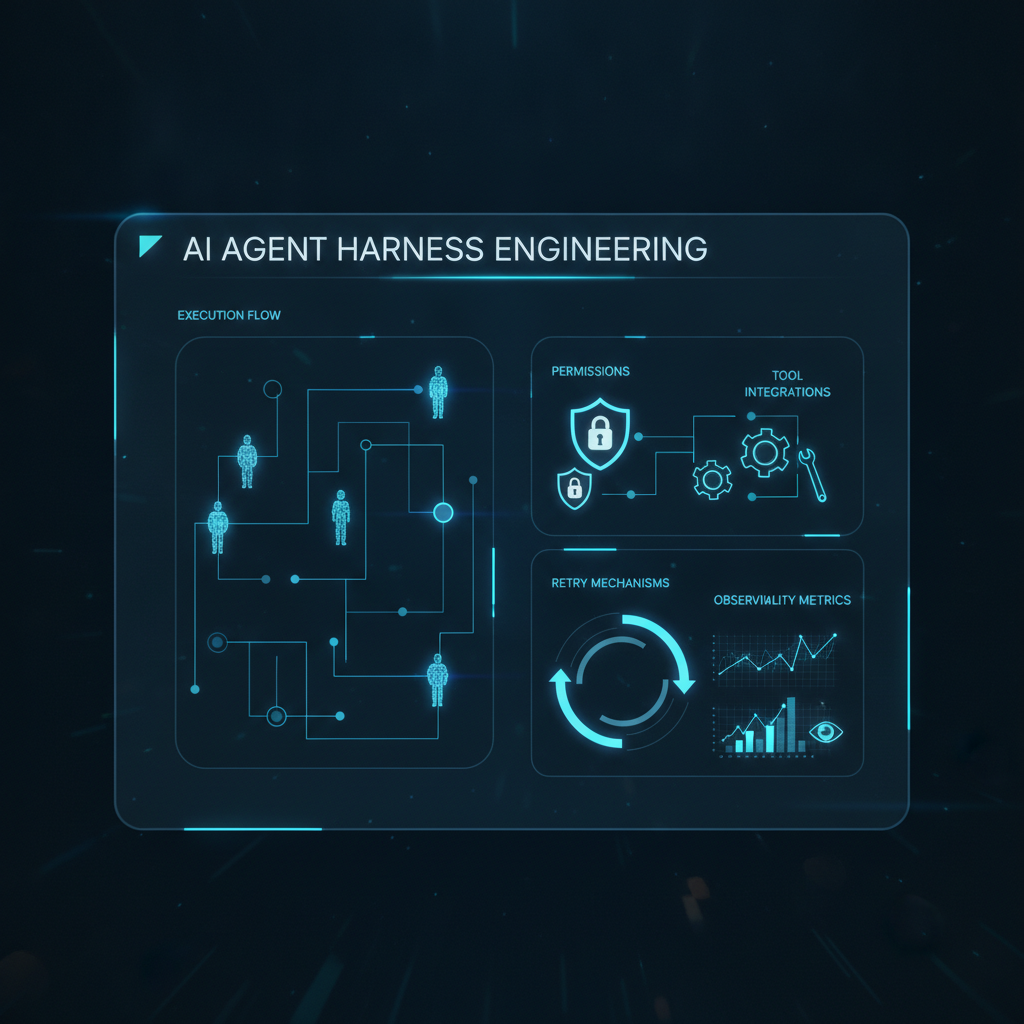
An AI agent harness is a specialized architectural layer that sits between autonomous AI coding agents (such as AI coding assistants, open source models, or composite multi-agent systems) and the underlying system environment. Its primary role is to mediate and govern the agents’ interactions with system resources, APIs, external tooling frameworks, and operating system services. Such mediation is critical because autonomous agents dynamically generate, modify, and execute code that can potentially impact system integrity, sensitive data confidentiality, or operational reliability.
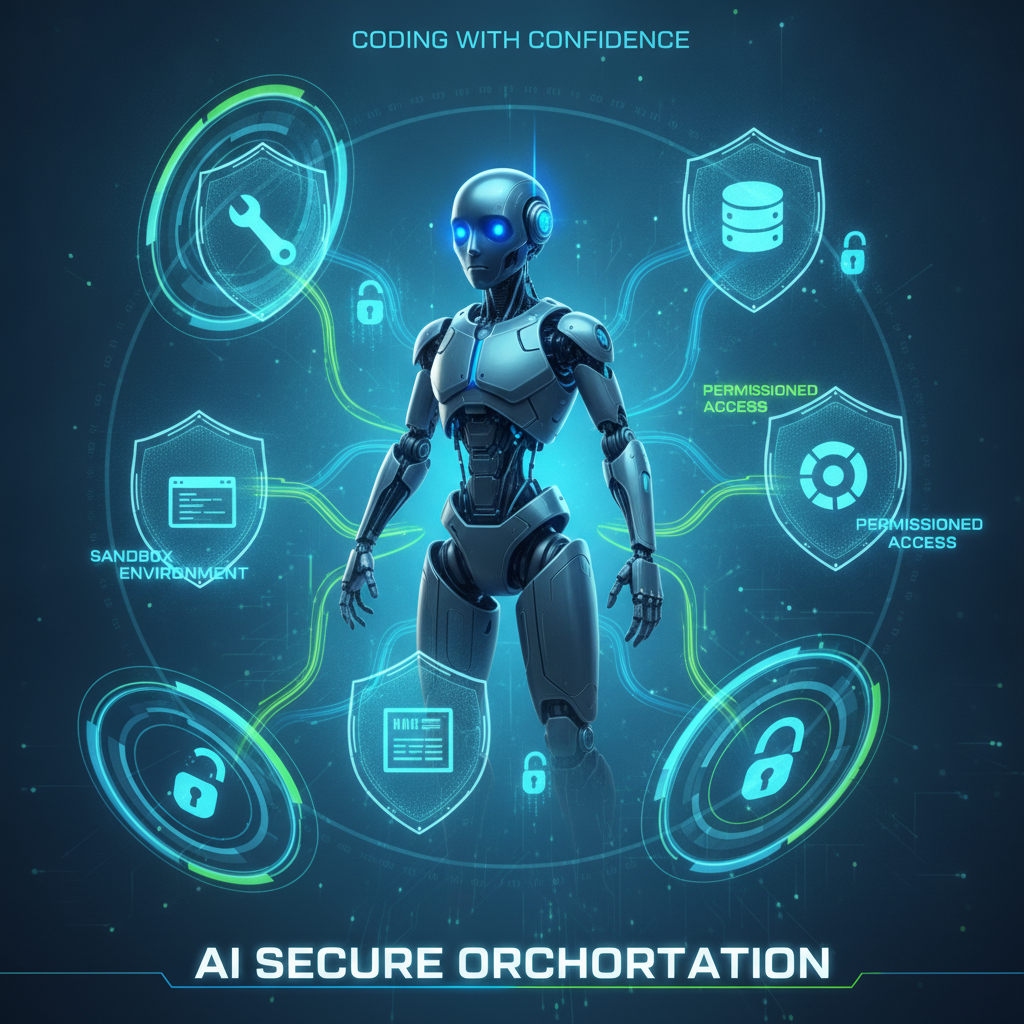
Technically, a secure AI agent harness enforces a rigid boundary around the agent’s runtime context, effectively sandboxing the runtime to isolate it from uninhibited access to core system processes, hardware interfaces, or sensitive files. This sandbox provides a controlled execution environment where privileges, visibility, and interactions are tightly regulated. Common architectural approaches include:
- Process isolation: Running each AI agent as an independent OS process with restricted user privileges and tightly controlled interprocess communication channels. This limits lateral movement and improves fault containment.
- Containerization: Utilizing lightweight containers (Docker, gVisor, Kubernetes pods) that employ namespaces and cgroups to isolate resources and processes. Container-based isolation strikes a balance between performance and security for executing dynamic AI agent workloads.
- Virtual machines: Employing hardware-virtualized environments with stronger isolation guarantees at a resource cost, particularly useful for high-assurance or compliance-critical deployments.
These mechanisms prevent agents from issuing arbitrary or unauthorized system calls, reducing the risk that dynamically generated or injected code escapes the confines of the harness.
Crucially, the harness must reconcile the autonomy required by agents to perform complex tasks while imposing granular control over permissible commands and resource use. For example, a coding assistant generating snippets should never escalate privileges or access files outside its project scope. Harness policy layers implement scoped permissions—enabling read-only repository access but denying network outbound calls except through vetted proxies.
Effective harnesses also orchestrate tool invocation and maintain consistent internal memory states. Agents interact with multiple subsystems—linters, build tools, debuggers, version control, cloud code repositories—each with distinct security postures. The harness abstracts these, coordinating calls via a unified interface to prevent unauthorized operations. Memory management subsystems maintain persistent state, logs, and context snapshots for agent reasoning while shielding sensitive data.
Open source AI coding agents, notably those in the Code-LLM ecosystem, exemplify this model. For instance, OpenAI’s Codex runs in sandboxed REPLs, whereas frameworks like LangChain implement remote tool use controls, embodying harness principles by enforcing clear separation between AI logic and environment interfaces.
A common oversimplification reduces AI agent harnesses to mere permission managers. In reality, they embed multifaceted controls encompassing operational orchestration, robust error handling, command validation, and state management, transforming the harness into a dynamic mediator sustaining system reliability alongside safe autonomy.
Primary Security Challenges in AI Agent Harness Design
Designing a secure AI agent harness for autonomous programming agents involves addressing nuanced, intersecting security issues. Autonomous AI coding agents inherently generate and execute code dynamically, creating vectors for system compromise or data exfiltration if not constrained properly.
The foremost threat is unauthorized command execution. Without rigorous enforcement, agents might issue system calls enabling privilege escalation, unauthorized file access, or unmonitored network activity. Data leakage presents another major risk—weak boundary enforcement could allow sensitive information to be exfiltrated covertly via outputs or illicit API requests. Further, compromised tool invocation chains can emerge if the harness fails to vet or audit third-party tooling triggered by agent commands, potentially exposing critical vulnerabilities.
Mitigation demands layered controls, including:
- Sandboxing: OS-level or hypervisor-enforced isolation restricts runtime environments. For Linux-based agents, seccomp-bpf filters limit accessible system calls, preventing escapes via ptrace or fork without explicit permission. Container runtimes enforce resource limits and filesystem visibility constraints. For in-depth implementation, Linux seccomp documentation outlines kernel-supported filtering mechanisms.
- Approval gates: Mandatory checkpoints intercept high-impact commands—e.g., deployment scripts or network operations—requiring human approval or automated policy validation. These gates enable auditable logs and callback hooks that enforce transparency and compliance, essential in regulated contexts such as Washington state’s secure access environments.
- Permission boundaries: Employ fine-grained access controls using Linux capabilities, SELinux/AppArmor profiles, or RBAC systems to ensure least privilege execution. Permissions dynamically adjust per task context, limiting file, network, and API access as appropriate.
Foundational OS-level security primitives alone do not suffice. For instance, secure boot establishes boot-time integrity by ensuring only authenticated firmware and loaders execute—but cannot govern runtime agent behavior. Secure boot provides a hardware root of trust that anchors the OS but does not substitute sandboxing or runtime permission enforcement. Leveraging secure boot alongside runtime controls offers holistic protection by securing platform integrity from firmware up to application execution. Refer to authoritative UEFI Secure Boot specifications or Microsoft documentation for detailed insights.
Adding external AI APIs (e.g., OpenAI API) increases the attack surface further. API endpoints exposed to AI agents require rate limiting, comprehensive logging, and anomaly detection to prevent abuse or lateral compromise. A defense-in-depth posture merges API-layer security with local harness enforcement to close gaps.
Importantly, harnesses go beyond simplistic access control—they embed multi-layered safety mechanisms such as progressive approval gates and continuous feedback loops, adapting permissions or triggering human intervention dynamically as task priorities and system states evolve. Failure to embed such adaptive controls risks bypassing static protections through clever command injection or AI-generated logic.
Engineers must also balance development velocity, system performance, and scalability. Excessively stringent sandbox policies limit AI agent capability to integrate complex tooling or perform code refactorings efficiently. Conversely, overly permissive models inflate attack surfaces and complicate audits. Successful harnesses strike a balance via flexible policy engines, context-aware permissions, and telemetry-driven enforcement tuning.
The interplay between architectural isolation and layered security in AI agent harnesses forms the bedrock of trustworthy autonomous coding systems. With this foundation, we examine the core security mechanisms essential for safe production deployments.
Core Security Mechanisms for AI Agent Harnesses
Robust security for autonomous AI coding agents executing in production demands a multi-layered approach combining strict runtime confinement, output validation, and meticulous permission management. These mechanisms reduce attack surfaces, prevent privilege escalations, and uphold reliability when agents autonomously interact with sensitive codebases, APIs, and system resources.
Two critical pillars in this landscape are sandboxing combined with permission boundaries, and approval gates coupled with rigorous command validation.
Sandboxing and Permission Boundaries
Sandboxing constitutes the primary architectural control to isolate an AI agent’s runtime execution, fundamentally restricting unauthorized operations and access to sensitive system resources. For autonomous coding assistants—which generate and execute code dynamically—effective sandboxes enforce strict isolation without undermining functional utility.
Architectural Models
At the OS-level, container-based sandboxing (Docker, Kubernetes pods) enjoys widespread adoption for its combined isolation guarantees and deployment flexibility. Containers leverage namespaces to partition process visibility and cgroups to limit resource consumption. Mandatory access control frameworks such as SELinux or AppArmor overlay fine-grained policy enforcement at the file and device interaction layers.
Beyond containers, language-level sandboxes restrict AI agent execution environments via specialized interpreters or isolated runtimes. Examples include JavaScript or Python sandboxes that blacklist system calls, disable reflection or dynamic imports, and expose only vetted APIs for operations like code editing, compilation, or deployment. These sandboxes offer minimal syscall exposure commensurate with task requirements, mitigating risks inherent in full OS access.
OS-native sandboxing tools provide further robust options. Apple’s Sandbox framework and Windows Defender Application Control implement kernel-level policy enforcement, integrating with secure boot, TPM hardware protections, and user-mode constraints to deliver trusted runtime baselines. Detailed information resides in Microsoft’s Windows Defender Application Control documentation.
Limiting System Access and APIs
Sandbox design adheres closely to the principle of least privilege—agents receive only the minimal operational permissions necessary, minimizing potential misuse vectors. Practical restrictions include:
- Filesystem access constrained to designated directories tied to project scope or input datasets.
- Network communications disabled or restricted to approved endpoints, often via proxy servers.
- Execution permissions bound to non-root user contexts, eliminating privilege escalation vectors.
- API exposure limited to safe operations, such as code compilation, unit testing, or repository queries, blocking direct system calls that could alter OS integrity.
Persistent storage like caches, logs, or intermediate data must reside in encrypted, integrity-protected volumes accessible exclusively within sandbox boundaries. Memory safety complements sandboxing by preventing buffer overflows, use-after-free, or code injection exploits.
Permission Boundaries and Fine-Grained Access Control
While sandboxes establish coarse isolation, permission boundaries provide granular operational control, defining explicitly what commands and data interactions an AI agent is authorized to perform. These boundaries often function analogously to capability tokens or scoped OAuth credentials, limiting agent privileges to precise task subsets.
Example permission delineations include:
- Read-only access to primary code branches.
- Write permissions restricted exclusively to feature branches or pull request drafts.
- No access to production secrets or deployment pipelines.
- Controlled invocation of internal APIs limited to static analysis or syntax validation.
Middleware components intercept all agent-issued commands, dynamically verifying permission compliance before allowing execution. This mitigates risks from command injection or flawed AI interpretations that could otherwise lead to unauthorized actions.
Balancing Functionality versus Restriction
One of the most challenging engineering trade-offs lies in balancing stringent sandbox restrictions and permission boundaries against AI agent usability and productivity. Overly restrictive sandboxes can incapacitate legitimate workflows; for example, blocking necessary access to third-party libraries, network services, or ephemeral execution contexts. Conversely, excessive privilege broadens the attack surface and complicates incident response.
Effective strategies include:
- Continuous telemetry-driven policy tuning informed by live usage data.
- Context-aware permission adjustments granting elevated access in supervised scenarios (e.g., during code review or emergency fixes).
- Layered defenses ensuring fallback mechanisms if wider capabilities are granted.
Managing Persistent State and Side Effects
Autonomous coding agents maintain persistent state through caches, logs, or intermediate files. Sandboxes ensure these data stores reside in isolated, encrypted volumes linked distinctly per agent or session to prevent cross-agent leakage or tampering. Managing side effects—external operations such as network I/O, file modifications, or build triggers—requires gating through approval mechanisms to ensure these irreversible actions do not violate policy.
Sandboxes as One Layer Among Many
Sandboxes are foundational but insufficient in isolation. They primarily restrict raw capabilities but cannot detect policy violations hidden in allowed commands or unexpected logical misuse. Thus, sandboxing fits within a layered defense strategy integrating:
- Secure boot to verify platform integrity from firmware upwards.
- Approval gates and policy enforcers managing command-level decisions.
- Continuous auditing, anomaly detection, and human-in-the-loop controls.
Together, these layers form a defense-in-depth posture mitigating a broad spectrum of threats including privilege escalations, insider abuse, and adversarial input exploitation.
Approval Gates and Command Validation
Complementary to sandboxing, approval gates act as high-assurance checkpoints intercepting and scrutinizing all agent-generated commands before they cross sandbox boundaries into execution environments or critical APIs.
Operational Architecture of Approval Gates
Approval gates are middleware components positioned between the AI agent’s output (commands, API invocations, or code snippets) and the underlying execution system. They:
- Capture and normalize all commands issued by the agent.
- Enforce security, compliance, and correctness policies via static and dynamic analyses.
- Approve safe commands for execution or reject/flag unsafe ones for human review or automated remediation.
These gates are typically integrated within continuous integration workflows, internal API gateways, or container orchestration platforms to minimize operational latency.
Validation Techniques
Approval gates employ diverse validation modalities suited to the complexity of AI-generated content:
- Static policy checks: Rule-based filters and allowlists detect disallowed command patterns, forbidden API calls, or unauthorized system modifications. For example, policies may reject commands attempting to alter protected files or access unapproved network domains.
- Dynamic semantic analysis: Program analysis techniques, including symbolic execution and static taint analysis, identify unsafe logic, potential injection flaws, or security hazards embedded in generated code.
- Behavioral heuristics and anomaly detection: Runtime monitoring compares command sequences and resource patterns against learned baselines to detect rogue or compromised agent behavior.
- Human-in-the-loop authorization: Critical or ambiguous commands escalate to human reviewers, ensuring final validation in regulated or sensitive workflows.
Achieving Low Latency and High Throughput
Approval gates function within interactive coding workflows and continuous deployment pipelines, necessitating design optimizations for low latency and scalability, including:
- Caching results of frequent command validations.
- Parallelizing validation workflows and employing asynchronous approval pipelines.
- Using lightweight heuristic checkpoints for early rejection prior to expensive analyses.
- Validating only incremental code or command changes rather than entire payloads.
Instrumentation and monitoring of gate performance metrics are key to balancing security and responsiveness.
Risk Reduction Outcomes
When effectively deployed, approval gates significantly decrease risks such as:
- Inadvertent deployment of malicious or unsafe code.
- Execution of rogue commands with potential for privilege escalation.
- Injection attacks propagated via generated code.
- Policy violations exposing organizations to compliance penalties.
Case studies document substantial reductions in rollback rates and operational costs following approval gate integration within AI-assisted development pipelines.
Integrating with AI Coding APIs
AI coding agents often interface with external APIs such as the OpenAI API or proprietary platforms like Apple AI. Approval gates secure these interactions by enforcing credential checks, rate limiting, input sanitization, and usage logging. This ensures the harness neither inadvertently becomes a vector for API misuse nor compromises organizational security postures. Recommendations from the OWASP API Security Top 10 provide best practices for safeguarding these integration points.
Policy Compliance and Productivity
Approval gates enforce data governance, intellectual property protection, and security standards without unduly impeding agent productivity by enabling:
- Dynamic policy evolution responding to emerging threats.
- Transparent decision logging supporting audits.
- User feedback loops guiding AI command improvement.
Iterative policy refinement informed by agent telemetry balances operational risk with automation benefits.
Through sophisticated sandboxing with adaptive permission boundaries and comprehensive approval gates, secure AI agent harnesses enable the safe deployment of autonomous coding agents within demanding, high-assurance development environments.
Operational Architecture and Tool Orchestration
Building on security fundamentals, operational architecture defines how the harness manages agent lifecycle, memory isolation, and external tooling integration. This ensures autonomous agents execute within controlled runtime boundaries while interacting safely with diverse AI coding capabilities, including cloud services (OpenAI API), proprietary assistants (Apple AI), and open source engines.
Memory Management and Process Isolation
Memory segmentation and process isolation form the basis for trustworthy harness design. Concurrent AI agents, especially in distributed or cloud setups, require strict compartmentalization to prevent state leakage, privilege escalations, or memory corruption cascading into major failures or data breaches.
A comprehensive approach involves:
- Dedicated memory spaces per agent/task: Beyond traditional process isolation, namespace partitioning and hardware memory tagging (supported by modern CPUs) associate metadata per memory access, preventing out-of-bound reads or writes across agent domains.
- Containerization and lightweight VMs: Tools like gVisor or Firecracker offer enforcible sandboxing by isolating runtime environments while optimizing resource use. This is critical when integrating diverse AI components with varying trust levels.
- Process isolation mechanisms: Employ OS features such as user namespace remapping, seccomp filters, and capability bounding to minimize attack surfaces. Trusted Execution Environments (TEEs) like Intel SGX or ARM TrustZone enhance isolation by encrypting memory regions and enabling attestation chains that verify code integrity.
Secure folder constructs complement memory isolation by housing configuration data, model parameters, and cached AI artifacts in encrypted, access-controlled stores accessible only to authenticated agent instances. Absent isolation, multiprogramming within shared heaps risks cross-agent contamination or privilege misuse, a well-documented failure vector leading to intellectual property leaks and forced system outages.
Strict isolation introduces operational trade-offs: start-up latency, increased memory footprints, and more complex debugging due to fragmented runtimes. Scalability demands orchestration layers that provision isolated runtimes dynamically while efficiently managing snapshots and agent state recycling.
This foundation enables secure tool orchestration, the next architectural focus.
Tool Delegation and Integration Patterns
The AI agent harness acts as both gatekeeper and orchestrator, controlling how autonomous coding agents invoke external tools and APIs. The design balances distributed agent autonomy with centralized policy enforcement to block unauthorized access or data exfiltration.
Delegation protocols convert agent commands into validated API calls or system executions over authenticated communication channels with rigorous:
- Authorization checks ensuring each request matches capability scopes.
- Input sanitization and output verification detecting and blocking malformed or unsafe payloads to prevent injection attacks or hallucinations.
- Layered enforcement with staged approval checkpoints controlling API key usage, rate limiting, and ephemeral token management.
- Comprehensive audit logging capturing every interaction for compliance and troubleshooting.
Integrating heterogeneous AI agents (e.g., open source models offering transparency vs commercial proprietary APIs with opaque behaviors) requires adaptive fallback strategies and real-time monitoring to handle failures, rate limits, or degraded services.
Hierarchical control planes often mediate agent operations by segmenting workflows into tiers—lower tiers enable fast, exploratory code generation; higher tiers impose stricter validations and human reviews for sensitive code paths. This hybrid approach preserves agent velocity while enforcing safety.
Continuous monitoring pipelines feed logs into anomaly detection models to identify emerging misuse patterns or output degradation, essential as AI model performance evolves and attacker sophistication grows.
Achieving secure tool delegation demands cryptographically sound authorization, robust sandboxing, and resilient operational observability tailored to AI-centric workloads.
Together, memory/process isolation and secure tool delegation form the secure AI agent harness backbone, enabling large-scale, safe autonomous AI coding.
Design Trade-offs, Limitations, and Failure Cases
Balancing Security and Agent Autonomy
Designing secure AI agent harnesses invariably involves trade-offs between enforced security postures and agent productivity. Controls such as sandboxing, approval gates, and permission boundaries essential for security can impose operational constraints inhibiting fluid, efficient AI-assisted coding workflows.
Sandboxing confines runtime environments, preventing unintended modifications or data leaks. However, overly strict sandboxes frequently block legitimate operations: dynamic API calls, local/network file access, or subprocess spawns required for compilation or testing. Over-restrictions can cause agents to stall, awaiting repeated permissions or manual overrides. For comprehensive sandboxing practices, consult Kubernetes’ Pod Security Standards.
For example, a corporate deployment of an open source AI coding agent with tight sandbox policies blocked required API endpoints for automated validation. This caused a 30% rise in pull request generation failures, increasing manual intervention and cycle times.
Approval gates enhance security by enforcing explicit human-in-the-loop checks or automated controls but introduce latency and bottlenecks. A financial services firm saw a 40% increase in build durations when all data-access commands triggered manual approvals, impacting developer velocity.
To mitigate friction, harnesses increasingly adopt dynamic, context-aware permission policies instead of static all-or-nothing rules. Agents may start with read-only permissions, dynamically requesting elevated rights contingent on behavior scoring or risk assessments. For instance, an agent passing runtime behavior heuristics may acquire temporary write or execute permissions, revoked post-task completion.
This adaptive permissioning reduces unnecessary friction, with telemetry and anomaly detection enabling continuous recalibration of harness constraints. Netflix’s engineering blog on dynamic risk-based access control explores these paradigms.
Practitioners must carefully calibrate security-autonomy trade-offs, recognizing that restrictive setups stifle AI gains while lax controls jeopardize infrastructure integrity. Continuous monitoring and automated tuning are vital to sustaining resilient, productive deployments.
Failure Modes and Mitigation Strategies
At scale, AI agent harnesses face diverse failure modes with operational and security consequences.
A primary risk is harness misconfiguration—mismatched sandbox profiles, conflicting permission sets, or incomplete approval gate policies. Such gaps can cause:
- Privilege escalations, where AI agents breach sandbox boundaries due to configuration holes.
- Denial of valid actions, where over-restrictive policies block critical tasks, disrupting workflows.
For example, a containerized open source AI agent with misconfigured volume mounts wrote configuration files outside its sandbox, manipulating CI pipelines and escalating privileges. Conversely, over-tightened command whitelists caused build stalls lasting hours pending manual overrides.
Sandbox escapes occur when agents exploit exposed or misconfigured APIs, side-channel leaks (logging, IPC), or spawn elevated subprocesses. Privileged container flags or improperly isolated kernel modules exacerbate risk. Penetration tests reveal scenarios where user-level containers escalate to host root via overlay filesystem misconfigurations.
Another failure mode entails unauthorized exposure of API keys or credentials. AI agents embedded with secrets may leak them through verbose logs or runtime dumps to unsecured telemetry endpoints. One incident involved an open source agent exposing OpenAI API keys in unencrypted log streams, leading to quota exhaustion and billing abuse.
Mitigation requires defense-in-depth:
- Real-time monitoring and audit hooks: Capturing syscall traces (e.g., via seccomp or eBPF), logging commands, and streaming events to anomaly detection platforms for rapid alerts.
- Fail-safe intervention: Automated kill switches or permission revocation triggered by suspicious patterns, alongside rollback of sandbox or policy states to known safe configurations.
- Configuration validation: CI pipelines verifying harness configurations via static analysis or policy compliance checks to preclude privilege leaks or unreachable states.
Such layered safeguards reduce incident likelihood and minimize operational fallout.
This examination underscores that secure AI harness construction is an ongoing engineering discipline demanding adaptation, vigilance, and rigorous quality assurance.
System-Level Protections and Secure Boot Integration
The trustworthiness of a secure AI agent harness fundamentally depends on system-level protections anchored in hardware-rooted trust, notably secure boot. Secure boot ensures that platform firmware, bootloaders, and the OS kernel are cryptographically validated prior to execution, preventing tampering or unauthorized code injection—a vital baseline given the dynamic, update-driven nature of AI tooling.
Technical Mechanisms of Secure Boot
Enabling secure boot involves UEFI firmware configurations that cryptographically verify boot components against trusted key databases (PK, KEK, db, dbx). A hardware Trusted Platform Module (TPM) or equivalent secure element supports secure key storage and attestation.
Integrating custom AI tools and runtime environments requires signing boot-level components with recognized certificates, often necessitating in-house PKI pipelines. This adds operational upfront complexity and elevates key management risk.
Conflicts arise when third-party AI tooling demands kernel-mode drivers or early boot components lacking vendor signatures, potentially halting system boot or forcing secure boot disablement. Isolating such tooling in user-mode sandboxes or container runtimes that avoid kernel privileges preserves secure boot integrity.
Failure Modes and Mitigation Strategies
Common secure boot failures include:
- Boot failures after updates: Invalidated keys or unsigned components cause boot halts or lockdown states. Mitigation involves version-controlled signing and staged staging environment rollouts.
- Third-party driver conflicts: Unsigned or incompatible drivers degrade hardware acceleration or device availability. Mitigations include sandboxing tooling in environments decoupled from kernel-space or employing signed driver delivery programs.
Firmware and OS event logs provide visibility into secure boot status, enabling automated alerts upon integrity violations.
Role of Secure Folder Constructs in Data Isolation
Secure folders—encrypted OS containers or hardware-backed isolated runtimes (e.g., Windows BitLocker, macOS FileVault)—protect AI artifacts, code snippets, model parameters, and logs. They enforce strict access controls preventing lateral movement or data leakage in compromised systems.
When AI agents generate code or cache intermediates, storing data within these encrypted containers confines exposure, reducing risk even if user-space defenses fail. For instance, combining Windows Sandbox with encrypted folders and Defender Application Guard provides layered isolation.
Trade-offs in Integrating Secure Boot and Folder Isolation
While essential for security, secure boot and folder isolation introduce productivity and flexibility trade-offs. Signing every tool iteration or mounting encrypted volumes imposes overhead on agile development and debugging processes.
Furthermore, sandboxed or encrypted environments may hinder interoperability with legacy tools or dynamic code injection required by advanced AI assistants, requiring carefully managed exceptions.
Layered defense models often include a “developer mode” allowing time-limited, audited secure boot bypasses to speed iterative workflows without broadly compromising security.
Layered Defense: Sandboxing, Permissions, and Chain of Trust
The secure AI agent harness constitutes a chain of trust beginning at hardware roots through firmware validation, OS integrity, and layered sandboxing. Hardware-backed secure boot anchors platform trustworthiness; secure folder isolation ensures data confidentiality; sandboxing enforces mandatory access control and fine-grained permissioning restrict tool and code behaviors.
This stacked architecture limits attack surface and counters lateral privilege escalations common in toolchain compromises, striking an engineered balance between security and functional usability.
Regulatory Compliance and Operational Monitoring
Beyond technical hardening, securing AI coding agent harnesses involves adherence to jurisdictional mandates and embedding continuous operational visibility. Jurisdictions like Washington state codify secure access mandates emphasizing multi-factor authentication, least privilege, data auditability, and data sovereignty—all critical when AI agents handle proprietary or sensitive code.
Regional Regulatory Requirements: Focus on Washington State
Washington state’s regulatory regime mandates secure access featuring multifactor authentication, cryptographically enforced policies, and auditable access logs. AI agents analyzing or generating code involving personally identifiable or proprietary data must implement corresponding governance controls.
Data locality requirements restrict processing and replication zones, complicating cloud-dependent harness designs. Harnesses must embed compliance primitives dynamically enforcing access consistent with these legal vectors.
Operational Monitoring: Audit Hooks and Incident Detection
Embedding tamper-resistant audit hooks enables real-time telemetry capturing agent lifecycle events: code executions, tool invocations, network calls, and configuration changes. These logs supply granular, verifiable metadata essential for incident detection and forensic investigations.
Balancing audit comprehensiveness versus runtime throughput requires architectural strategies—smart filtering, sampling, on-device aggregation—to avoid monitoring overwhelm or throughput degradation.
Cryptographic timestamping and log integrity protections mitigate tampering risks, employing blockchain hashes or trusted timestamp authorities for enhanced assurances.
Traceability Design Patterns and Performance Considerations
Audit embedding often leverages aspect-oriented programming or proxy patterns intercepting critical API calls with minimal code base intrusion. Logical grouping of hooks enables decoupled maintenance and enhanced scalability.
Employing asynchronous logging pipelines, differentiating critical synchronous events from bulk telemetry, minimizes performance impacts. Adjustable logging verbosity supports diagnostics during incidents while defaulting to minimal overhead in normal operation.
Logged Data for Compliance Audits and Incident Response
Regulatory audits require demonstrable enforcement artifacts—logs evidencing policy adherence, user actions, and data access flows. Logging infrastructure must balance detail depth with privacy protections and storage constraints.
Anonymization, encryption at rest, and tiered retention policies protect user privacy and cost-effectiveness. Logs also feed anomaly detection engines accelerating breach containment.
Secure Access Controls Integration at the Tooling Layer
Dynamic enforcement of secure access policies integrates identity and access management (IAM) systems with AI agent harnesses. MFA, RBAC, and ABAC gate AI tooling availability and permissions.
Example: an AI coding assistant querying sensitive repositories validates user credentials, device posture, and session risk scores before granting tooling or data access. Failures trigger sandbox lock-downs or session termination, aligning runtime behavior with regulatory mandates.
Adaptive permission enforcement via continuous authentication minimizes risks of session hijacking or insider threats. Centralized policy engines support consistent governance across geographic and operational boundaries.
Jurisdictional Adaptability
Harness designs abstract compliance controls to enable modular policy updates fitting diverse jurisdictions. Logging levels, data residency constraints, or authentication schemes can be toggled per operational locale without full system rewrites.
Multinational deployments benefit from compliance-as-code approaches embedding regulatory checks into deployment pipelines, streamlining validation and governance.
Together, system-level protections, compliance adherence, and operational monitoring form the engineering backbone sustaining secure, auditable AI coding agent harnesses in real-world, regulated environments.
Key Takeaways
Designing secure AI agent harnesses involves architecting controlled runtimes that enable autonomous AI coding agents to perform tool operations safely while mitigating risks inherent in dynamic code execution. For engineers, this encompasses sandboxing, permission management, and task orchestration to prevent unauthorized actions and maintain integrity, particularly when integrating third-party AI tools or APIs like OpenAI API. The harness mediates command validation, secure memory access, and approved resource usage—critical for compliance-heavy or secure-access environments such as Washington state, and for aligning with secure boot protections.
- Define precise sandbox boundaries to isolate AI processes: Implement process and filesystem sandboxing that limits runtime contexts, preventing privilege escalation and unauthorized resource access during autonomous execution.
- Enforce multi-layered approval gates for command execution: Employ strict whitelisting and permission checks on all tool invocations to guard against unintended side effects and enforce secure coding automation workflows.
- Design tool orchestration with explicit capability delegation: Map available tools and APIs to AI agents with clearly scoped capability sets, ensuring fine-grained control over permissible actions throughout sessions.
- Embed secure memory management to protect sensitive artifacts: Separate persistent context from ephemeral execution states, utilizing encryption and protected storage for credentials or API keys (e.g., OpenAI API tokens).
- Incorporate audit and observability hooks for real-time monitoring: Enable comprehensive logging of decisions and commands to detect anomalies and support forensic investigation, vital for open source AI coding agent deployments.
- Balance autonomous operations with explicit intervention checkpoints: Structure harness controls so automated workflows can be paused or overridden, minimizing risks from runaway code or unintended state persistence.
- Leverage system-level security such as secure boot integration: Synchronize harness lifecycle with hardware root-of-trust mechanisms to ensure environment integrity and tamper-evidence from system start-up.
- Account for heterogeneous operational requirements: Accommodate diverse security policies, including secure folder permissions and OS secure boot configurations, maintaining usability without compromising core security guarantees.
- Anticipate failure modes arising from dynamic AI toolchains: Implement fallback, recovery, and policy validation processes to handle partial failures or tool incompatibilities, preserving harness stability.
- Limit third-party dependencies to minimize attack surface: Curate external AI tools carefully to reduce supply chain risks while maintaining necessary functionality and performance.
This foundation prepares engineering teams to explore concrete sandboxing technologies, permission schemas, and tool orchestration architectures enabling safe, autonomous AI workflows in demanding, real-world coding environments.
Conclusion
Securing autonomous AI coding agents demands harness architectures that balance isolation, control, and operational flexibility. Robust sandboxing and finely grained permission boundaries provide essential runtime confinement, preventing unauthorized or unsafe behaviors without stifling productivity. Approval gates introduce intelligent, policy-driven validation that audits AI-generated commands, protecting system integrity from logical errors or adversarial inputs.
Combining memory and process isolation with secure, auditable tool delegation yields scalable orchestration capable of managing multi-agent environments safely. Layered system protections anchored by secure boot and secure folder technologies extend trust from hardware upward, complementing runtime safeguards.
By integrating stringent regulatory compliance and embedding continuous operational monitoring, harnesses ensure robustness and auditability even across complex legal terrains and production environments. The key engineering challenge moving forward is designing adaptive, context-aware controls that evolve with growing AI complexity—ensuring autonomous coding agents remain reliable, transparent collaborators rather than opaque sources of risk within modern software ecosystems.
As autonomous AI coding systems scale and diversify, the question transitions from whether security challenges will arise to whether harness architectures make these complexities visible, testable, and correctly enforced under pressure. Building harnesses with this foresight will shape the next generation of secure, productive AI-driven development platforms.