Introduction
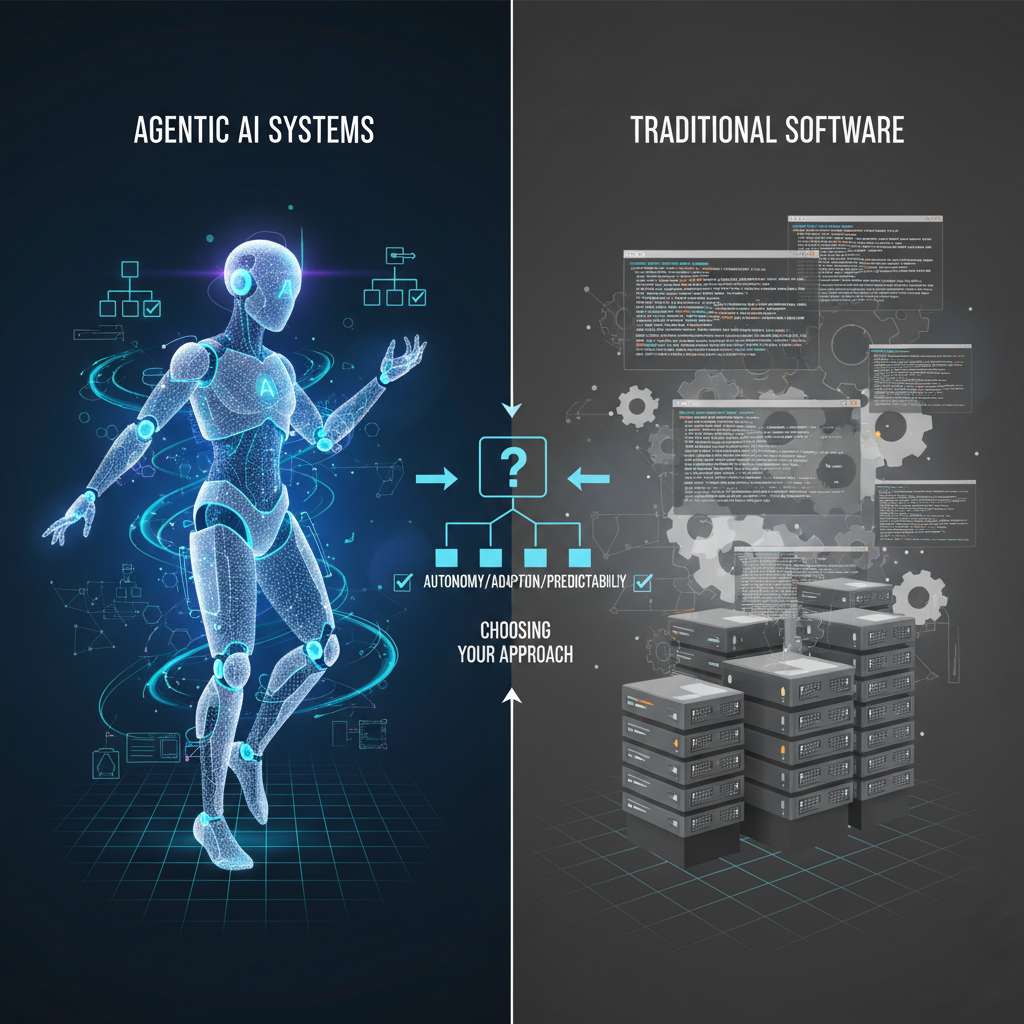
Traditional software architectures rely on deterministic, linear workflows that execute predefined tasks with limited adaptability. When deployed in complex, uncertain environments, these systems struggle to handle dynamic goals or unexpected conditions without extensive manual intervention. Agentic systems break from this mold by embedding autonomous AI agents capable of closed-loop decision-making and continuous self-coordination, enabling real-time adaptation and multi-agent collaboration.
This shift introduces new design challenges around state management, synchronization, and security, as agentic AI trades straightforward traceability for flexible, goal-driven behavior. Understanding when to leverage agentic systems—and how to architect them for resilience, scalability, and compliance—is critical for engineers building software in domains where evolving objectives and partial observability are the norm rather than the exception.
In this article, we’ll dissect the core differences between agentic systems and traditional software, explore practical use cases where autonomous AI agents deliver value, and outline the architectural patterns, security practices, and operational strategies essential for deploying reliable agentic AI at scale.
Foundations of Agentic Systems and Traditional Software
Defining Agentic Systems and Core Characteristics
At its architectural core, an agentic system comprises autonomous AI agents designed to perceive their environment, make decisions independently, and act towards achieving defined objectives. These agents are not passive modules with static functionality; rather, they embody closed-loop architectures where continuous feedback from the environment or internal states shapes ongoing behavior. This dynamic operational model is central to the agentic AI systems architecture, which revolves around iterative sensing, reasoning, and action cycles that enable real-time adaptation.
Fundamentally, agentic systems are constructed as multi-agent ecosystems, where numerous agents concurrently engage in self-coordination, resource negotiation, and goal alignment. This embedded mutual awareness distinguishes agentic systems from monolithic or component-based architectures typical of traditional software. For example, in a distributed robotics swarm, each robot (agent) autonomously evaluates its surroundings, predicts outcomes, and alters course in coordination with its peers to complete a task such as area coverage or object transport. This intrinsic multiplicity leads to architectural demands beyond mere modularization: asynchronous communication channels, dynamic role assignment, and sophisticated conflict resolution protocols become essential.
The agentic AI workflow is characterized by several technical pillars:
- Closed-loop decision-making: Agents continuously monitor outcomes and environmental stimuli, adjusting future actions in response to new data or failures. This continuous loop facilitates responsiveness to non-stationary, noisy inputs and emergent environmental dynamics.
- Autonomy with interdependence: While each agent operates with a degree of independence, global system goals require flexible collaboration and negotiation mechanisms, balancing local optimization against collective objectives.
- Emergent behaviors: System-level intelligence is often not explicitly programmed; rather, it emerges from the complex interactions among agents adapting to dynamic environments. These behaviors can include spontaneous role allocation or conflict avoidance without central coordination.
- Feedback-driven learning: Agents leverage continuous feedback to refine internal models and improve decision policies over time, enabling adaptation even as external conditions evolve or partial observability limits precise state knowledge.
This creates an architecture where deterministic sequencing gives way to probabilistic, data-driven interactions. Unlike classical standalone AI applications that run predictive models or static decision trees, agentic systems embed decision nodes that evolve through interaction, making the “agentic systems meaning” fundamentally tied to adaptivity, autonomy, and multi-agent orchestration.
A misconception in the field is equating “agentic AI” with a single autonomous agent capable of isolated decision-making. In practice, the power of agentic systems lies in the cooperative interplay of multiple distinct agents managing distributed complexity. For instance, AI-powered supply chain platforms deploy multiple specialized agents—inventory optimization, demand forecasting, logistics planning—each autonomously pursuing local goals but coordinating to optimize overall throughput and resilience. Here, asynchronous message passing and role negotiation protocols are critical, enabling the system to reconfigure dynamically according to fluctuating demands or disruptions.
Ultimately, the agentic AI systems architecture demands new design paradigms accommodating:
- Dynamic heterogeneity of agents with diverse skills and resource access
- Real-time self-coordination, often implemented through decentralized consensus or market-based mechanisms facilitating fault tolerance and scalability
- Continual feedback integration enabling rapid self-correction and continual learning under uncertain conditions
These architectural traits grant agentic systems a distinct capability to operate effectively in uncertain, non-stationary environments where traditional pre-programmed workflows would fail or require constant human intervention. For a detailed discussion on agentic AI and its architecture, see IBM’s explanation of Agentic AI.
Traditional Software Architectures and Their Limitations
Understanding agentic systems requires a contrast with traditional software architectures, which have historically been developed around deterministic control flows, explicit state machines, and well-defined module interfaces. These systems operate predominantly under a command-and-control paradigm where discrete software components execute linear or branching workflows encoded in code. Tasks follow a predictable progression, triggered by inputs and advancing through specified states until completion. This approach underpins everything from transaction processing systems to embedded controllers and microservices.
At a high level, traditional architectures presuppose stability in requirements and environments. The software execution graph and dependency mappings are largely static, allowing software engineers to reason about system behavior through exhaustive state enumeration and rigorous validation. Parallelism is either managed explicitly through static threading models or via message queues with preconfigured workflows. Interactions among components rely on tightly coupled, deterministic protocols with minimal runtime role variability.
Such design principles are effective for bounded problem domains featuring well-understood processes and fixed business logic. Banking transaction systems, inventory management applications, and enterprise resource planning software exemplify domains where traditional software architectures excel.
However, the deterministic nature of traditional software exposes fundamental limitations when deployed in dynamic, unpredictable environments or with complex, multifaceted tasks requiring autonomous decision-making:
- Inflexibility and brittleness: Embedded logic must anticipate all possible states and transitions. Unforeseen scenarios cause unexpected failures or require costly patches and redesigns.
- Lack of autonomous adaptation: Traditional systems cannot self-modify workflows or decision policies; human developers must intervene to alter behavior in response to new information.
- Sequential or tightly synchronized workflows: This inhibits responsiveness to asynchronous events and complicates scaling across distributed or heterogeneous resources, introducing latency and bottlenecks.
- Limited coordination semantics: Coordination between independent software components typically relies on centralized orchestrators or rigid APIs, lacking built-in mechanisms for dynamic negotiation or conflict resolution.
For example, real-time traffic management software employing static routing algorithms with fixed update intervals struggles to accommodate rapid changes such as accidents or weather conditions without manual recalibration. Similarly, conventional supply chain software often requires centralized scheduling and explicit human oversight to handle unforeseen demand shifts or logistic disruptions, lacking decentralized self-organization.
Engineering challenges arise when adapting traditional architectures to modern AI-driven, environment-interactive systems:
- Incorporating real-time feedback loops into rigid pipelines requires extensive redesign and often results in brittle event handling or callback hell.
- Handling heterogeneous and evolving component capabilities demands complex interface management, versioning, and backward compatibility layers.
- Achieving dynamic task allocation and load balancing across distributed nodes involves heavyweight middleware or bespoke coordination layers, increasing operational complexity.
The tight coupling of components and deterministic control flows fundamentally conflict with the goals of autonomous, resilient, and scalable AI applications. Consequently, the rise of agentic systems addresses these gaps by embedding autonomy, asynchronous coordination, and feedback-driven learning natively into the architecture.
To summarize, while traditional software architectures provide dependability and predictability for deterministic, bounded domains, their static design and limited flexibility constrain performance in AI contexts requiring ongoing adaptation and coordination among multiple intelligent agents. This contrast motivates a paradigm shift towards agentic system design for complex, uncertain, and dynamically evolving problem spaces. For analysis of these architectural constraints, see InfoQ’s discussion on software architecture challenges.
With this foundation distinguishing the fundamental characteristics of agentic systems from traditional software, it becomes essential to analyze the behavioral and architectural differences that ensue, deeply impacting system design approaches and operational expectations.
Comparative Analysis: Agentic Systems vs Traditional Software
Behavioral and Architectural Differences
Agentic systems represent a paradigm shift from traditional software architectures, fundamentally altering how software engineers design workflows and manage internal system dynamics. Traditional software typically operates on linear, deterministic task execution models. Inputs traverse a well-defined control flow graph, passing through static procedural logic layers that yield predictable outputs. In contrast, agentic systems embed goal-driven behavior, adapting workflows dynamically based on real-time interaction with their environment and partial state observability, resulting in fundamentally non-linear, branching execution paths.
This behavioral divergence manifests strongly in workflow design. Traditional software workflows enforce rigid sequence and conditional branching, making reasoning about possible execution paths straightforward. Agentic AI workflows reorganize subtasks autonomously, reprioritize goals mid-run, and integrate continuous feedback loops altering trajectories adaptively. For instance, an agentic system managing supply chain logistics may dynamically reallocate resources in response to unforeseen shipment delays or demand spikes—actions infeasible within static software pipelines.
State management accentuates these contrasts. Traditional software maintains finite, mostly deterministic state machines with well-understood error handling procedures. States transition explicitly following programmed logic, and asynchronous event handling typically involves queued interrupts or callback mechanisms with bounded complexity. Agentic systems maintain rich, evolving internal representations of environmental beliefs, hypotheses, and objectives—enabling real-time adaptation under uncertainty. This necessitates state designs that continually fuse new observations, update confidence levels, and reconsider action plans, akin to partially observable Markov decision processes (POMDPs) but often on larger distributed scales.
A crucial insight—often overlooked—is that agentic systems rarely operate as isolated autonomous entities. Instead, they are frequently orchestrated multi-agent applications, layered architectures whose complexity surpasses the modular or monolithic patterns prevalent in traditional software. Engineers must design distributed state management strategies that reconcile asynchronous inputs from multiple agents, implement sophisticated communication protocols ensuring reliable information flow, and embed fault tolerance mechanisms to mitigate partial failures without systemic collapse.
This multi-agent orchestration differentiates agentic systems fundamentally from traditional software architecture. For example, distributed ledger technologies employed to maintain consistency across agent states illustrate how coordination complexity scales disproportionately compared to conventional client-server models. Designing such systems demands rigorous attention to concurrency control, state synchronization, and rollback strategies, with limited precedents in classical software engineering.
Semantic clarifications emerge from terms like “agentic AI framework comparison” and “agentic AI workflow,” revealing common misapprehensions equating these systems to single-agent AI or simple automation tools. Instead, agentic systems embody orchestrated architectures facilitating emergent, collective problem-solving outcomes. Frameworks supporting these architectures provide abstractions for task delegation between specialized agents, shared knowledge spaces, and protocols supporting negotiation and conflict resolution to enhance collective decision-making.
Real-world examples include autonomous driving stacks where perception, planning, and control subsystems—modeled as interacting agents—collaborate continuously to achieve safety and efficiency goals. Traditional software might sequence tasks explicitly (object detection → path planning → control commands), but agentic systems enable these parts to adjust dynamically through continual inter-agent negotiation and adaptation, dramatically expanding operational robustness.
Having established these architectural distinctions and behavioral complexities, the following section explores the technical coordination mechanisms crucial for maintaining coherent, scalable operation within multi-agent systems.
Coordination Mechanisms in Multi-Agent Systems
Synchronization Protocols and Feedback Loops
Coordination within agentic systems hinges on robust synchronization protocols allowing distributed agents to share state information, negotiate goals, and harmonize decision-making dynamically. Unlike traditional software inter-process communication—which often operates on rigid request-response patterns—agentic systems leverage explicit and implicit communication channels tailored for asynchronous, uncertain environments. These channels support continuous information exchange fueling feedback loops essential for real-time adaptation.
The design of synchronization protocols must navigate challenges arising from diverse agent capabilities, communication latencies, and partial observability. Techniques such as vector clocks, consensus algorithms (e.g., Raft, Paxos), and publish-subscribe models maintain causal ordering of messages and ensure eventual state consistency. For instance, in distributed multi-robot systems, agents broadcast pose and intent asynchronously, resolving discrepancies through consensus before coordinated maneuvers, thereby avoiding collisions or redundant efforts.
Feedback loops in agentic AI extend beyond conventional error handling or retry logic. They underpin emergent cooperation, conflict resolution, and ongoing learning. Within agentic AI tools, iterative feedback cycles continuously refine predictions and plans. A financial trading agentic system might adjust portfolio allocations by analyzing peer agents’ risk assessments and market feedback, iteratively converging on systemic balance while mitigating exposure.
Engineering these feedback loops requires balancing competing constraints. High-frequency feedback enhances responsiveness but risks oscillations or instability due to over-corrections or network jitter. Conversely, sparse feedback can dampen responsiveness, slowing adaptation and allowing error accumulation. Designers must tune latency parameters, information granularity, and feedback scope to maintain equilibrium—ensuring agility without sacrificing robustness or reaction correctness.
Decision Arbitration and Conflict Resolution
Conflicts arising from competing or overlapping goals among agents pose a core challenge in multi-agent coordination. Agentic systems embed arbitration mechanisms to resolve such conflicts systematically. These mechanisms include negotiation-based algorithms wherein agents iteratively exchange proposals and concessions, voting schemes aggregating preferences, and hierarchical command structures imposing prioritization rules.
For example, a logistics agentic system managing fleet assignments might encounter resource contention between delivery agents. Negotiation protocols enable bidding for vehicle access based on priority and projected utility, while fallback voting methods arbitrate ties. Hierarchical arbitration allows supervisory agents to enforce global priorities, ensuring alignment with organizational goals over local agent preferences.
Engineering these mechanisms demands prioritizing consistency, reliability, and fairness. Arbitration algorithms must guarantee conflict resolution without deadlock or starvation and support fault tolerance against partial agent failures. They often leverage game-theoretic frameworks, constraint satisfaction, or consensus protocols to ensure convergence and prevent livelocks.
Scalability, Robustness, and Fault Tolerance
Scaling coordinating infrastructures to large agent populations compounds complexity. Architectures must accommodate dynamic agent joins and leaves without disrupting global coordination. Distributed state stores or replicated data structures underpin these designs, preserving eventual consistency despite network partitions or partial failures.
Robustness requires isolating faults so degraded agents do not cascade failures system-wide. Techniques such as heartbeat monitoring, leader election, and redundant communication pathways bolster fault tolerance. Agentic AI tools frequently employ checkpointing and rollback mechanisms to recover gracefully from inconsistent states caused by communication failures or agent errors.
Ensuring convergence toward overarching goals remains challenging. Agents often possess incomplete or conflicting information, necessitating coordination mechanisms that reconcile discrepancies effectively. Hybrid architectures blending centralized guidance with decentralized autonomy strike this balance, as in warehouse automation where central coordinators allocate tasks while agents execute with local adaptation.
Practical tooling includes open-source multi-agent simulation platforms and orchestration frameworks with built-in negotiation, synchronization, and fault recovery capabilities. These abstractions ease composition of complex agentic workflows and enable rapid prototyping across domains from automated customer service to collaborative robotics.
The architectural and behavioral distinctions just discussed underscore the profound shift agentic systems introduce over traditional software. This frames the necessity to explore concrete use cases where agentic architectures demonstrate operational advantages in solving intractable challenges of modern engineering.
Use Cases and Practical Applications of Agentic Systems
Agentic systems present a paradigm shift from traditional software architectures by embedding multiple autonomous AI agents that collaborate and orchestrate complex workflows. These systems excel in scenarios characterized by high complexity, dynamic environments, and evolving objectives—contexts where monolithic or static pipeline software reaches inherent limits.
Scenarios Favoring Agentic AI Deployment
Traditional software systems function effectively when requirements are stable and predictable. However, inflexible architectures falter when goals shift mid-execution or operate under uncertain contexts—market fluctuations, unpredictable user behavior, partial system failures. For example, static customer support workflows may fail to escalate ambiguous queries appropriately, degrading user experience.
Agentic systems address these shortcomings through distributed decision-making among specialized AI agents handling subtasks autonomously yet collaboratively. This multi-agent orchestration introduces architectural complexity; agents negotiate task allocations, react to environmental feedback, and tolerate interruptions. Such adaptability becomes indispensable when engineering solutions for long-horizon planning or open-ended problems—such as sustaining network uptime, dynamic resource allocation, or continuous integration pipelines with fluctuating workloads. For a detailed dive into agentic AI orchestration, see Agentic AI, explained from MIT Sloan.
This added complexity introduces trade-offs. Designing and operating agentic systems demands robust synchronization, fault-tolerant communication, and clear governance of agent responsibilities. Engineering teams must balance these challenges against benefits like resilience, agility, and scalability, particularly given increased cognitive load during debugging and maintenance.
Organizations should evaluate suitability considering:
- Non-deterministic environments: When systems must continuously reassess goals due to uncertain data or external factors (e.g., trading systems), agentic systems pivot dynamically without halting execution.
- Asynchronous and concurrent task processing: Multi-agent parallelism enables decentralized control, overcoming bottlenecks in monolithic pipelines.
- Fault tolerance through autonomous recovery: Agents detect anomalies locally, recover gracefully, or escalate issues, enhancing system resilience.
- Continuous learning and feedback: Agents monitor their own behavior, enabling incremental self-optimization.
- Operational scale or speed beyond human intervention: When decisions must outpace human reaction—such as cybersecurity incident response or high-frequency trading—agentic systems scale decision-making breadth and depth effectively.
Comparing agentic systems with simpler AI implementations—standalone pipelines or rule-based engines—reveals limitations in single-agent systems for systemic agility and fault isolation. This understanding clarifies the complexity and capability step-change necessitated by agentic approaches.
Examples of Agentic Systems in Technical Domains
Agentic systems have proven their value across technical domains, demonstrating how multi-agent orchestration supports robustness, scalability, and operational efficiency beyond traditional approaches. The following cases exemplify agentic AI in practical engineering contexts.
Autonomous Control Systems
Autonomous control systems, such as driver assistance or unmanned aerial vehicles, represent quintessential agentic architectures. Multiple specialized agents—for perception, trajectory planning, control, and safety monitoring—collaborate in real time despite noisy, rapidly changing inputs.
Perception agents asynchronously analyze sensor data to detect objects and obstacles. Trajectory planners calculate safe paths balancing efficiency and risk. Safety agents monitor decisions, ready to override or re-prioritize actions under emergencies. Message-passing frameworks handle latency and communication losses, leveraging shared state models like blackboards to maintain consistent situational awareness. Dynamic task reassignment—for example, reallocating sensor monitoring when a component fails—enhances fault tolerance.
Such architectures necessitate careful handling of agent communication protocols to avoid deadlocks, reconciling inconsistent world models, and safeguarding agent security against hijacking. These complexities trade off for necessary responsiveness and reliability crucial to safety-critical applications.
Adaptive Infrastructure Management
In cloud infrastructure management, agentic systems deploy independent agents overseeing load balancing, anomaly detection, energy optimization, and capacity planning within decentralized control frameworks.
Agents consume telemetry data to detect service degradation or contention locally. Through peer negotiation, they coordinate mitigation strategies such as workload redistribution or resource scaling without centralized bottlenecks. Energy optimization agents adjust scheduling based on demand forecasts, coordinating load balancers to shift workloads opportunistically. Capacity planners forecast resource needs, initiating preemptive provisioning.
These agentic ensembles achieve scalability and fault tolerance beyond traditional centralized tools prone to delays or single points of failure. Key enablers include publish-subscribe messaging protocols, distributed ledgers for resource states, and sandboxed execution environments preserving security isolation.
Distributed Data Pipelines
Large-scale data processing frameworks benefit from agentic design by coordinating pipeline stages as autonomous agents managing ingestion, transformation, validation, and storage tasks.
Each agent monitors local throughput and error rates, negotiating with upstream and downstream agents to adjust load or reassign partitions. Agents dynamically adapt to failures, retry strategies, and resource contention through continuous feedback and negotiation protocols.
This decentralized coordination enhances pipeline resilience and elasticity, enabling rapid recovery from node outages or data spikes without manual intervention. Engineering challenges include maintaining exactly-once processing semantics and preserving data ordering under asynchronous agent interactions.
Collectively, these examples highlight architectural trade-offs when adopting agentic systems: the need for robust, low-latency inter-agent communication; managing complexity of asynchronous workflows; and designing failure modes that prevent cascading faults while preserving system integrity.
Effectively engineering agentic systems demands balancing these complexities against tangible gains in adaptability, fault tolerance, and operational efficiency—a trade-off increasingly aligned with the demands of modern software ecosystems.
With real-world contexts illustrating agent cooperation and self-organization, it becomes clear engineering teams must rethink design and infrastructure to fully leverage agentic systems. This leads naturally into examining architectural and technical challenges inherent in their deployment.
Architectural and Technical Challenges in Agentic Systems
State Management and Synchronization Complexities
Agentic systems fundamentally differ from traditional software by decentralizing control across autonomous agents collaborating concurrently. Unlike monolithic architectures with centralized state stores, agentic AI faces distributed state management challenges amplified by partial observability, asynchronous operation, and dynamic interactions.
A core difficulty lies in maintaining consistent shared state across independently operating agents dependent on a coherent global context. Network latency, message reordering, and failures exacerbate state propagation delays and inconsistencies. Agents maintain private local states reflecting sensor inputs, heuristics, or beliefs, complicating alignment for coordinated actions.
A prevalent approach employs Conflict-Free Replicated Data Types (CRDTs), which allow concurrent updates without coordination, guaranteeing eventual consistency without locking. CRDTs enhance resilience to network partitions but introduce transient inconsistencies where agents may act on stale or diverging states, risking contradictory commands or inefficiencies in latency-sensitive settings.
Consensus algorithms like Paxos or Raft provide strong consistency by electing leaders and enforcing ordered log replication, but incur high communication cost and latency, impairing scalability and responsiveness in large-scale, real-time agentic workflows. Selecting between eventual consistency and stronger synchronization involves evaluating real-time requirements, fault tolerance, and application-criticality.
The asynchronous communication nature in agentic systems also complicates synchronization. Messages arrive out of order, requiring mechanisms such as Lamport logical clocks or vector clocks to infer causality. Scaling these approaches to large, dynamic agent sets introduces overhead in metadata management and performance.
Partial state visibility is endemic; agents operate with localized knowledge only. Designing effective state aggregation or shared knowledge bases demands compact, semantically rich representations balancing communication overhead against fidelity. For example, autonomous vehicles employ shared scene representations synthesizing multiple perception streams, enabling coordination without overwhelming network bandwidth.
A representative case arises in smart manufacturing agentic AI frameworks. Workflow agents—responsible for planning, perception, actuation—must synchronize world models encompassing machine status, inventory, and environmental factors. Failure to maintain synchronization risks conflicting commands, such as simultaneous manipulations of shared parts, jeopardizing safety and efficiency.
In essence, agentic system design requires balancing consistency, performance, and partition tolerance under the constraints of the CAP theorem. Often, agentic systems relax strong consistency in favor of availability and fault tolerance, using adaptive protocols that respond to network conditions and scale. This departure contrasts with traditional software relying on centralized databases or tightly coupled transactions, highlighting a fundamental architectural shift. For an authoritative exploration on distributed consistency trade-offs, see Martin Fowler’s patterns of distributed systems.
Reliability and Scalability Considerations
Reliability in agentic systems introduces complexities absent in deterministic software. Agent decisions derive from probabilistic models or AI-driven policies, compounding inter-agent dependencies into webs of potential failure modes propagating unpredictably.
Deadlocks or livelocks—agents indefinitely waiting on conditions or cycling through ineffective actions—emerge from conflicting local policies lacking global arbitration. Detecting these requires continuous monitoring interpreting inter-agent message patterns and state transitions, complemented by recovery protocols deploying rollbacks, agent resets, or arbitration agents mediating deadlocks.
Error propagation poses additional risks; a perception agent misinterpreting sensor data cascades flawed inputs downstream, producing unsafe behaviors. Fault tolerance thus rests on isolation strategies enabling graceful degradation or fallback modes alongside redundancy, such as multiple sensor fusion agents voting to mitigate single points of failure. Unlike traditional software where exceptions are globally catchable, agentic systems embed decentralized fault detection and meta-reasoning about agent health and confidence.
Scalability adds further challenges. As agent populations scale to hundreds or thousands—as in robotics swarms or algorithmic trading—communication overhead and coordination complexity potentially explode. Naïve all-to-all messaging saturates bandwidth and increases latency, undermining responsiveness. Architectures often embrace hierarchical coordination layers or federations where local leaders arbitrate subsets, reducing global messaging.
For example, a robotics platform used a three-tier coordination: low-level controllers manage motor actuations, mid-level supervisors allocate tasks within units, top-level coordinators oversee cross-unit collaboration. This structured approach achieved linear coordination overhead scaling, maintaining throughput and enabling elastic agent addition or removal. Reported improvements include 30% task completion rate increases with sub-second command latencies under load.
Operationally, monitoring and observability tools for agentic systems must capture emergent system behaviors from agent interactions beyond single-agent telemetry. Simulation environments facilitate scenario testing revealing latent issues like failure cascades or bottlenecks pre-deployment. Digital twins and sandboxed synthetic models evaluate dynamic reconfiguration impacts and partial agent faults.
In summary, agentic system reliability and scalability require embracing decentralized control, probabilistic failure modes, and dynamic topologies, contrasting starkly with deterministic, static traditional models. These demands propel iterative testing, hierarchical structuring, and novel fault detection protocols to ensure high availability and efficiency at scale. For further reading on distributed observability, see the OpenTelemetry project.
Having analyzed these architectural challenges, focus shifts naturally to security and threat models uniquely posed by agentic systems’ autonomy and distributed control.
Threat Models Specific to Agentic Systems
Agentic systems, composed of autonomous entities dynamically coordinating and adapting, introduce distinct security risks that diverge materially from traditional software or single-agent AI. Their autonomy, dynamic privilege assignment, and extensive inter-agent communications expand the attack surface substantially.
A pivotal concern lies in elevated privilege scopes. Unlike fixed, well-scoped traditional software modules, agents dynamically adjust roles and permissions based on tasks or delegations, increasing risk of privilege escalation both within agents and laterally across agents. Compromised agents may propagate control over subsystems covertly, breaching conventional perimeter defenses as agent trust boundaries are diffuse or decentralized.
Complex inter-agent communication channels are vulnerable to message tampering, replay, spoofing, or man-in-the-middle attacks. Weak authentication or integrity protections enable adversaries injecting commands, manipulating agent behaviors, or poisoning the system’s shared state, with cascading failures possible from a single compromised link.
Coordination protocols, vital to synchronization and consistent behavior, can be targeted via race conditions, deadlock inducement, or inconsistent state injection. Such sabotage risks system-wide failures, particularly critical in safety-sensitive domains like autonomous vehicles or financial markets.
The inherently dynamic task delegation and feedback loops, central to agent adaptation, invite adversarial exploitation. Feeding corrupted data or falsified feedback can skew agent decisions, amplifying errors or weaponizing the system against itself through feedback-induced instability or reinforcement of harmful patterns.
These vectors contrast with traditional software security models that assume clear boundaries and static trust relationships. Agentic systems demand shifting toward fine-grained, context-aware trust evaluation, continuous validation, and anomaly detection rather than binary perimeter defenses.
Common risks manifest in data leakage when sensitive information traverses inadequately protected channels; unauthorized action execution via compromised agents or spoofed messages; and systemic breakdowns caused by corrupted coordination or feedback processes that are difficult to diagnose or mitigate post-factum.
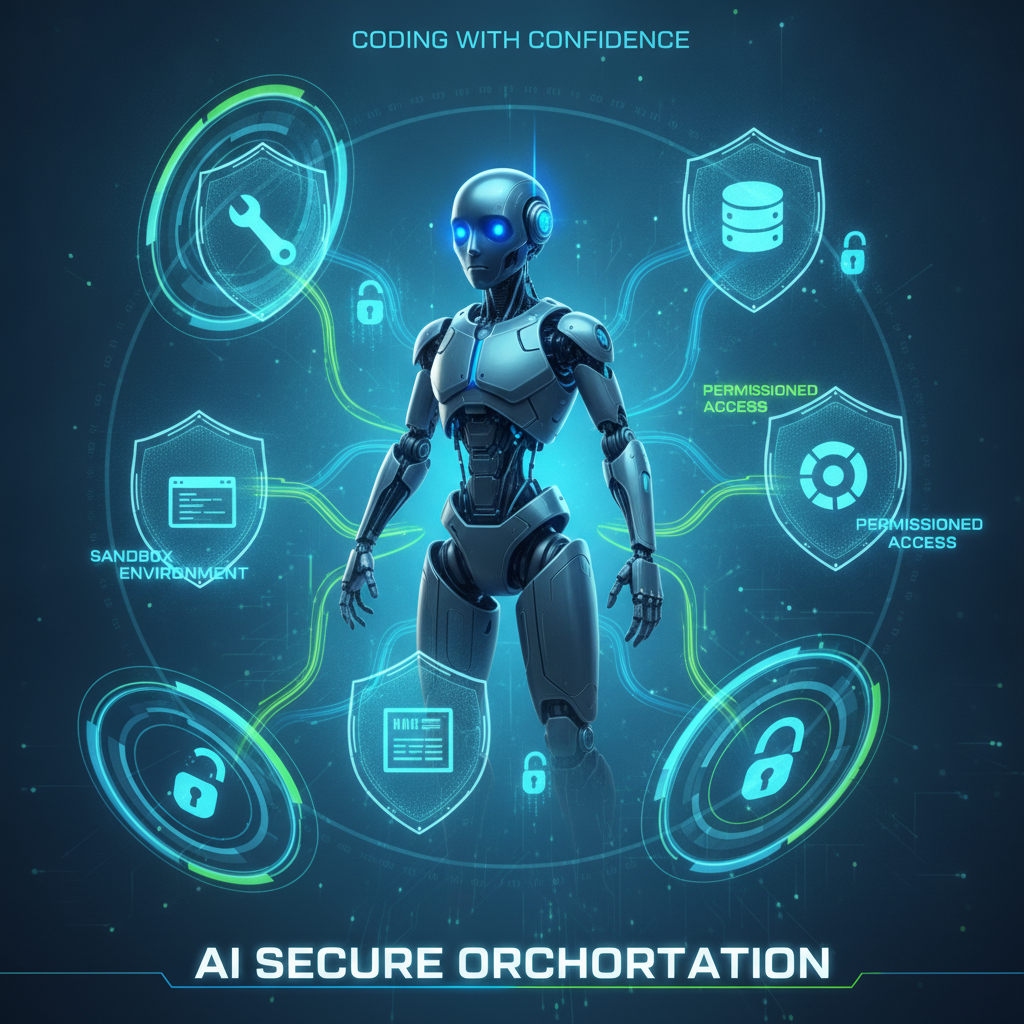
Practical constraints compound mitigation difficulty. Low-latency agent interactions limit the use of heavyweight cryptographic protocols. Dynamic privilege models challenge static access control policies. Effective defenses require layered strategies combining cryptographic message integrity, continuous behavior monitoring, adaptive privilege management, and hardened coordination protocols.
For an in-depth examination of these security challenges, see AWS’s overview on agentic AI security.
Understanding these distinctive threat landscapes is essential before exploring architectural designs that promote compliance, transparency, and trustworthiness in agentic systems.
Designing Agentic Systems for Compliance and Transparency
Addressing the complex security landscape requires engineering agentic systems that uphold compliance, transparency, and traceability. Unlike linear software, agentic systems embody dynamic, nonlinear, multi-agent interactions evolving workflows in real time, complicating audit and regulatory adherence.
A foundational compliance requirement is building comprehensive audit trails that record agent life cycles, inter-agent communications, decision points, and state transitions. Instrumenting agents and middleware to generate immutable logs with contextual metadata enables forensic reconstruction of execution paths. Preserving causality and temporal order is critical to understanding system behavior, supporting investigations and regulatory scrutiny.
Implementing such audit systems often involves cryptographically signed, tamper-evident logs stored in append-only ledgers or trusted execution environments. Because agentic systems generate high-volume communication, architects must balance audit granularity against storage and processing overhead, employing event aggregation, selective logging triggers, or tiered retention policies to maintain real-time performance. OpenTelemetry’s guidelines provide best practices for reliable observability in distributed systems.
Architectural patterns that facilitate compliance include observer agents or monitoring layers with read-only access analyzing live streams and agent states without interfering with core logic. MAS frameworks and container orchestration systems often support such transparent oversight via plugin mechanisms.
Transparency also depends on carefully designed feedback loops with embedded monitoring hooks. Anomaly detection algorithms based on statistical baselining or machine learning flag deviations in agent adaptation patterns, such as unexpected behavior spiking or coordination inconsistencies. Early anomaly identification enables proactive incident response rather than costly post-incident analysis.
Best practices tailor access control to dynamic agent privileges. Compared to static RBAC, attribute-based access control (ABAC) or capability-based models better enforce contextual, ephemeral, tightly scoped permissions. Agents tasked with sensitive data receive time-limited access revoked automatically post-task, preventing privilege creep. Controls span agent-resource and agent-agent interactions to mitigate lateral escalation.
Ensuring data integrity across agent communications entails end-to-end encryption with mutual authentication, supplemented by runtime validation detecting malformed or adversarial payloads attempting outcome manipulation.
Anomaly detection in agentic environments is uniquely challenging due to dynamic, evolving agent behavior profiles. Domain-specific heuristics, ensemble ML models, or hybrid deterministic-probabilistic methods can enhance detection fidelity, covering anomalous message rates, inconsistent coordination states, or abrupt heuristic shifts triggering alerts or containment.
These design principles intersect with regulatory frameworks like GDPR, HIPAA, and emerging AI ethics guidelines mandating auditability and explainability. Implementing compliance often entails engineering trade-offs balancing audit depth against latency and operational flexibility against security.
Agentic AI frameworks vary in native support; some open-source MAS platforms provide encrypted messaging and extensible logging but require add-ons for advanced anomaly detection. Commercial platforms may bundle compliance dashboards and policy enforcement at customization costs. Engineers must tailor solutions contextually, adopting security-by-design and continuous monitoring mindsets.
Embedding these strategies fosters compliance, enhances resilience, and builds stakeholder trust—prerequisites for mission-critical agentic AI adoption.
With threat profiles and compliance frameworks in perspective, practical engineering considerations next focus on frameworks and operational strategies enabling sustainable agentic system development and deployment.
Practical Guidance for Building and Operating Agentic Systems
Frameworks and Tools for Agentic AI Development
Developing agentic systems departs substantively from traditional software engineering due to decentralized autonomy, multi-agent interactions, and persistent lifecycle management. Specialized frameworks facilitate construction, deployment, and operation of these complex systems.
Leading frameworks like Ray, LangChain, AutoGPT, and Jina AI exemplify diverse approaches to creating and orchestrating AI agents. Ray, originally built for distributed computing, supports autonomous agents via its Actor concurrency model and pluggable schedulers, enabling asynchronous agent workflows with dynamic task delegation and lifecycle monitoring.
LangChain assembles chains of cognitive agents into pipelines, emphasizing language-based agents managing subtasks and incorporating reasoning capabilities. It provides orchestration primitives maintaining state and context dependencies across agents, supporting runtime feedback for adaptive task prioritization.
AutoGPT automates agent creation by embedding goal-driven heuristics and recursive task breakdown, orchestrating agents that dynamically spawn sub-agents based on need, embodying autonomy and emergent coordination. Jina AI specializes in distributed neural search workflows, orchestrating heterogeneous models executed by agents for indexing and retrieval under load balancing and fault tolerance.
Comparison highlights critical factors influencing engineering decisions:
- Scalability: Ray achieves near-linear scaling across clusters, suiting large agent counts. LangChain performs well at mid-scale NLP-heavy loads but may require additional infrastructure at scale. AutoGPT remains experimental and model throughput-limited. Jina AI excels for distributed data-centric workflows with specialized scaling.
- Flexibility in AI models/data: LangChain offers broad adapters for language models and knowledge bases; Ray’s modularity supports heterogeneous model types. Jina AI focuses on vector-based multimodal indexing. AutoGPT is model-agnostic but typically tied to OpenAI engines.
- Monitoring & health management: Ray integrates telemetry, heartbeats, and dashboards for real-time health. LangChain and AutoGPT depend more on external monitoring or custom logs. Jina AI embeds fault tolerance and health checks within flow orchestrators.
- Feedback/adaptive learning: LangChain and AutoGPT prioritize runtime feedback embedding for continuous tuning. Ray offers modular support for feedback via task resubmission or actor replacement; Jina AI’s online learning features remain emergent.
- Maturity & community: Ray and LangChain enjoy active communities and enterprise adoption, backed by extensive documentation and tooling easing knowledge transfer. AutoGPT is younger and more experimental; Jina AI serves niche data search use cases.
Traditional frameworks like Spring Boot or ASP.NET excel in centralized, request-response applications but lack primitives for orchestrating autonomous multi-agent workflows, emergent behavior, or adaptive reconfiguration.
Concerns around framework lock-in and debugging complexity are common. Ray’s open-source modularity mitigates lock-in risks and integrates well with Python AI ecosystems. LangChain’s extensible interfaces support swapping models or agents flexibly. Debugging remains challenging, but advances like integrated dashboards and trace visualizers (e.g., Ray Dashboard) improve situational awareness.
A representative case study includes a financial fraud detection platform using Ray: 50+ specialized agents analyze transactional data subsets, coordinating dynamically to reduce false positives by 30% and saving $3 million annually. Initial debugging was mitigated through customized logging filters and dashboard enhancements contributed to the community.
Framework selection should consider operational scale, heterogeneity, observability priorities, and tolerance for experimental features given the inherent coordination complexity agentic systems impose.
Operational Strategies for Resilient Agentic Systems
Operating agentic systems in production departs fundamentally from traditional reliability approaches due to asynchronous, autonomous, and emergent behaviors. Agents operate with partial observations, complex messaging, and continuously evolving policies, increasing monitoring and debugging complexity beyond conventional monolithic or microservice systems.
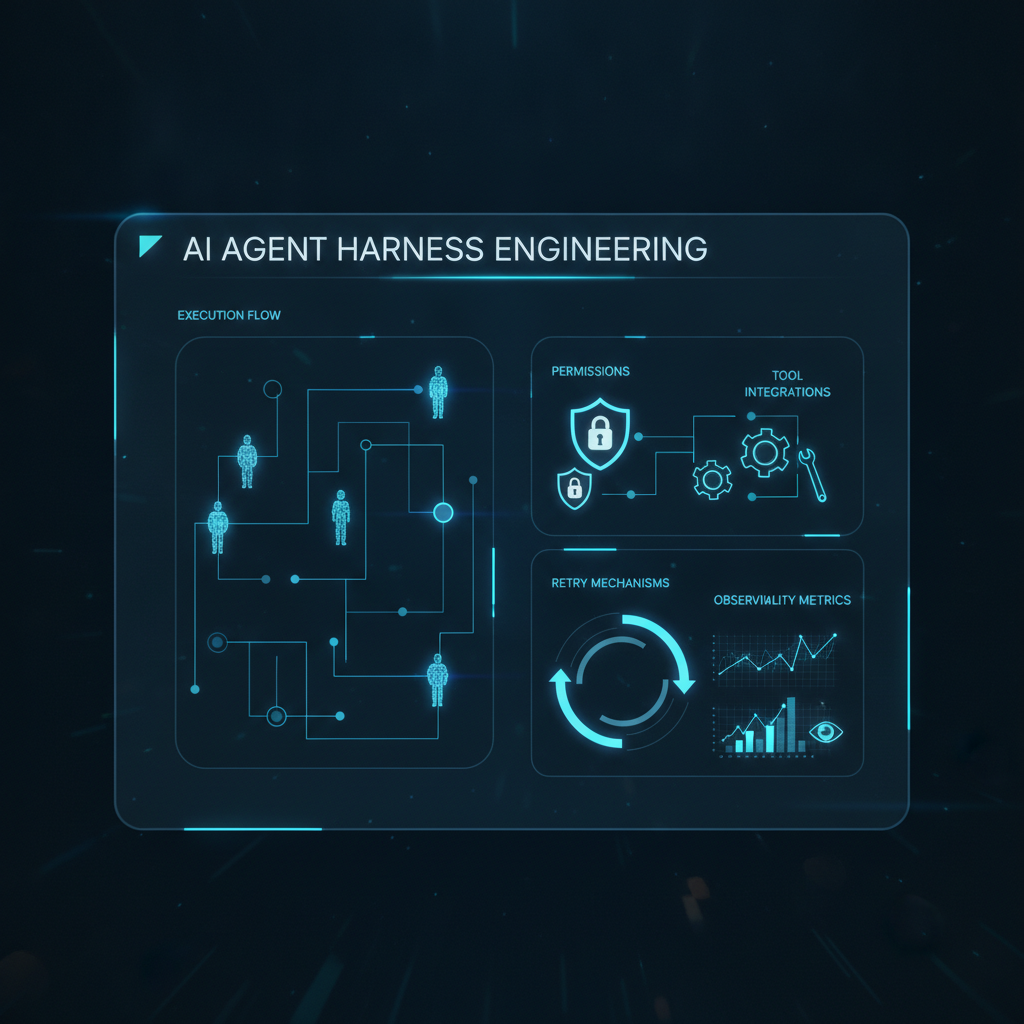
Effective monitoring must extend beyond system-level metrics to agent-specific state, inter-agent communication, and decision provenance. Instrumentation should expose internal decision context, message timelines, and causal chains enabling tracing of outcomes and identification of anomalous agent states or communication patterns.
Anomaly detection trained on historical behavior flags issues like looping agents or conflicting states. Health checks monitor responsiveness and resources, triggering automated fallback or kill-switches to isolate failing agents and avoid cascading faults common in multi-agent topologies.
Conventional monitoring assumes deterministic states or controlled concurrency, inadequate for agentic AI’s probabilistic and evolving nature. Observability aligned with OpenTelemetry enhances tracing and telemetry coherence across distributed agents.
Testing exceeds unit or integration scopes. Simulation environments must emulate multi-agent dynamics under diverse or adversarial conditions, exposing deadlocks, resource contention, or policy regressions inaccessible to traditional methods. Digital twins enable iterative protocol tuning and failure mode discovery pre-production.
For example, a logistics firm used city-scale digital twins simulating delivery scenarios, reducing routing variance by 15% and identifying feedback-induced oscillations. This ensured operational robustness prior to live deployment.
Automated design and continuous tuning underpin operational stability as agents adapt to shifting environments. Embedded feedback loops refine policies using runtime telemetry and user outcomes. While improving adaptability, they necessitate safeguards against feedback instabilities or model drift that degrade performance.
Maintaining balance involves integrating continuous learning pipelines with monitoring, enabling rapid rollback of harmful adaptations. Human oversight remains essential, supported by operational playbooks for manual intervention, agent quarantine, and comprehensive rollbacks—forming a hybrid governance approach balancing agility and control.
Operational teams must embrace emergent, non-deterministic failure modes rather than traditional deterministic assumptions. Layered safeguards combining automated anomaly detection, human-in-the-loop governance, and simulation-based testing form the foundation of resilient agentic operations.
Through mastering these architectural and operational insights, engineers can confidently build and maintain agentic AI systems transitioning from experimental prototypes to dependable production assets.
Key Takeaways
Agentic systems mark a shift from traditional software architectures by embedding autonomous, goal-driven AI agents capable of dynamic decision-making and self-coordination. Unlike reactive software, agentic AI continually adapts to evolving environments via feedback loops and multi-agent interactions, enabling complex problem-solving beyond predefined workflows. Mastery of their architecture, operational constraints, and security considerations is crucial for engineers integrating or building resilient, scalable AI agents in uncertain domains.
- Autonomous closed-loop control defines agentic systems: Feedback-driven decision cycles enable adaptive planning and action, contrasting with traditional deterministic execution. This enhances flexibility while complicating state management and traceability.
- Modular multi-agent coordination is foundational: Distributing tasks across specialized agents communicating via defined protocols boosts scalability and fault isolation but necessitates robust synchronization and conflict resolution to prevent inconsistencies.
- Dynamic, open-ended problems signal agentic suitability: Domains requiring ongoing adaptation—real-time optimization, autonomous robotics, complex scheduling—benefit from agentic architectures, whereas static workflows remain suited to traditional software.
- Security layers must address emergent behavior risks: Decentralized decision-making surfaces novel attack vectors—adversarial manipulation, goal misalignment—demanding continuous monitoring, anomaly detection, and fail-safes.
- Reliability demands redundancy and observability: Autonomous, uncertain operations require extensive logging, diagnostics, and fallback mechanisms distinct from traditional deterministic error handling.
- Feedback loops are design primitives: They refine decisions and dynamically adjust workflows; poorly designed feedback risks instability or oscillation, requiring careful tuning and formal verification.
- Framework choice hinges on extensibility and integration: Varying support for communication, learning, and environment modeling necessitate careful selection aligned with long-term goals and infrastructure compatibility.
- Interpretability versus autonomy is a trade-off: Highly agentic systems often sacrifice transparency for adaptability, impacting debugging and compliance; hybrid architectures or constrained autonomy may balance these demands.
This synthesis prepares engineers for deeper engagement with agentic AI architectures, juxtaposing them with traditional software, while guiding practical implementation and secure deployment strategies.
Conclusion
Agentic systems transform software architecture from rigid, deterministic workflows into dynamic, decentralized multi-agent ecosystems capable of autonomous decision-making and real-time adaptation. Their decentralized coordination, continuous feedback integration, and emergent behaviors address key limitations of traditional software in complex, uncertain environments. Yet these benefits impose significant engineering challenges: distributed state synchronization, fault tolerance, novel security threat surfaces, and observability complexities demand new design paradigms and development frameworks.
For practitioners, mastering agentic systems means confronting architectural shifts from static control to probabilistic coordination, embracing emergent failure modes, and embedding comprehensive observability and security by design. The progression toward scalable, resilient agentic AI frameworks will drive future software systems over heterogeneous infrastructure, increasingly operating under uncertain information with minimal human intervention.
As complexity scales and engineering teams decentralize, the critical question transcends mere feasibility: will your architectural decisions illuminate, enforce, and verify correctness amid evolving agentic behaviors? Designing today’s agentic systems with transparent coordination, traceable feedback, and adaptive governance is foundational to building tomorrow’s intelligent infrastructure resilient under pressure and unpredictable disruption.